Give the grid agent a decision to watch
Describe what matters and when you need it, and a scheduled report agent investigates the market, writes a cited issue, and keeps each edition together.
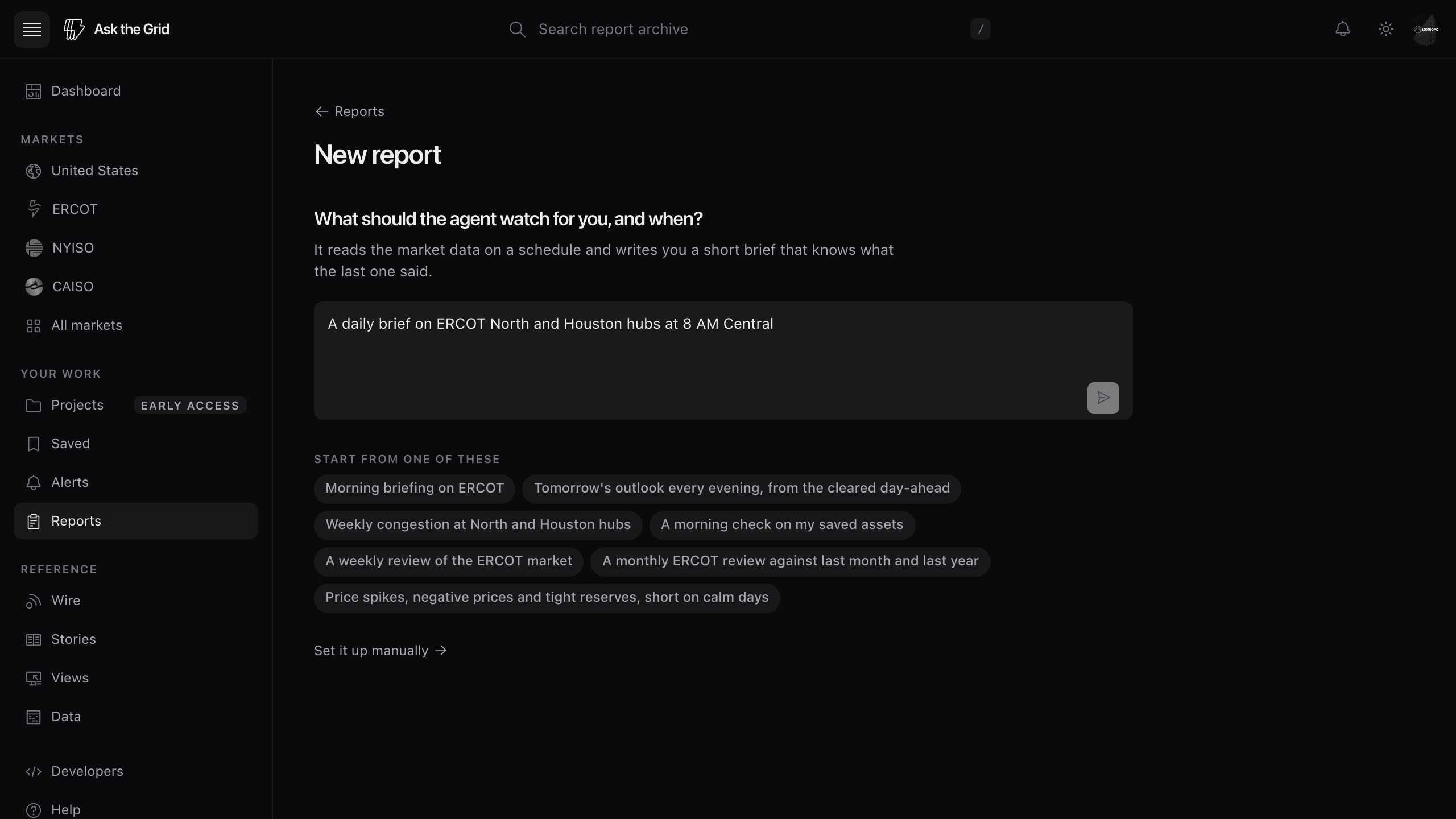
A useful grid question often comes back tomorrow. Reports turns that question into recurring work: describe the decision, the assets or market evidence to watch, and when you need the answer. The agent drafts the report's scope, schedule and instructions for you to review before starting it.
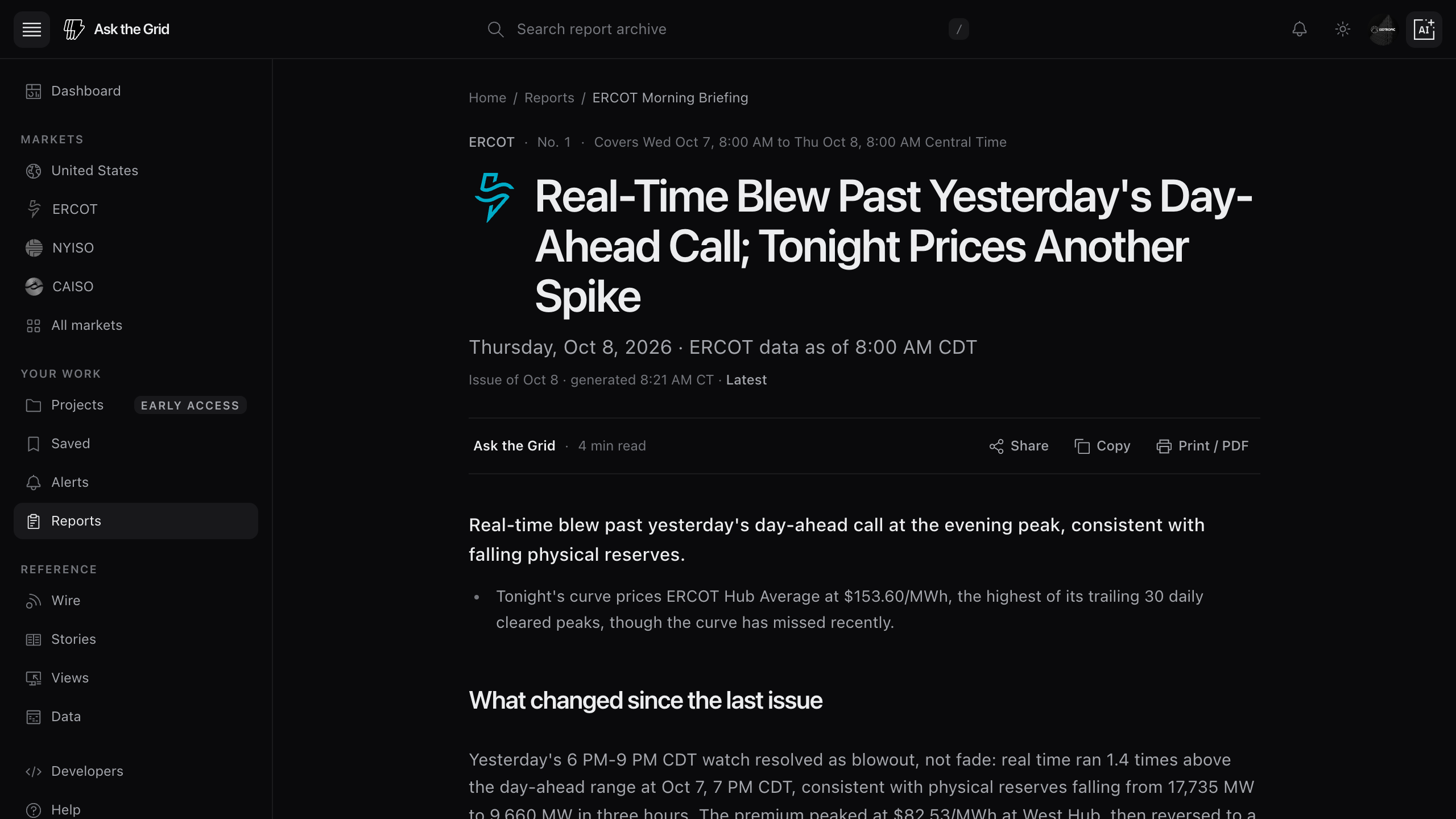
Each issue brings the new readings, the change since the last edition, the analysis and the next watch items into one account of the decision. Read the short edition by email, open the charts and sources on Ask the Grid, and return to the same archive when you want to compare today's outlook with the one you actually had yesterday.
Start with the decision
Write what the report should watch and when. The draft puts its coverage, first delivery and issue outline together so you can check what will run. Adjust the schedule, audience or instructions in place, then start it. Choose a one-time issue for a single investigation or a recurring schedule for work you expect to revisit.
Custom report setup currently runs on ERCOT. The saved collection you start from can supply the assets, while the report's instructions explain what you need to decide about them.
Read the issue with its evidence
Every edition keeps its covered window and data cutoff beside the analysis. Charts, source notes and methods carry the context needed to check a figure or explanation. Follow a notable reading into the cited evidence, or open the grid agent with the issue attached to ask the next question.
A forecast belongs to the model and issuance time available for that issue. The archive preserves that outlook alongside subsequent editions, so a later live forecast does not silently replace the evidence behind an earlier call.
Review and steer the next edition
Turn on Review before sending when the report needs your approval. Inspect the web and email editions, revise a paragraph or ask the agent to rework a section, then approve the issue for delivery. Pending issues and run status stay with the report.
Steer the next issue records what you want more or less attention on. Pause a schedule without losing its archive, or run an issue now when the decision cannot wait for the next scheduled edition.