Keep the context, then share the answer
Collections carry assets and research context back into the map, while shared agent answers give teammates a focused result they can read and build on.
Grid research rarely ends with a single lookup. Saved collections now connect the assets you are tracking, the context you have kept about them, and the map where you investigate them. Open the collection on the grid, select a member, and continue with its normal asset record while the collection remains in view.
A finished agent answer can also become a focused handoff. Share the latest answer as an unlisted link that preserves its question, charts, cards, and map context. A teammate can read it without an account and start their own follow-up from that evidence, instead of reconstructing the original investigation.
Organize the work around a collection
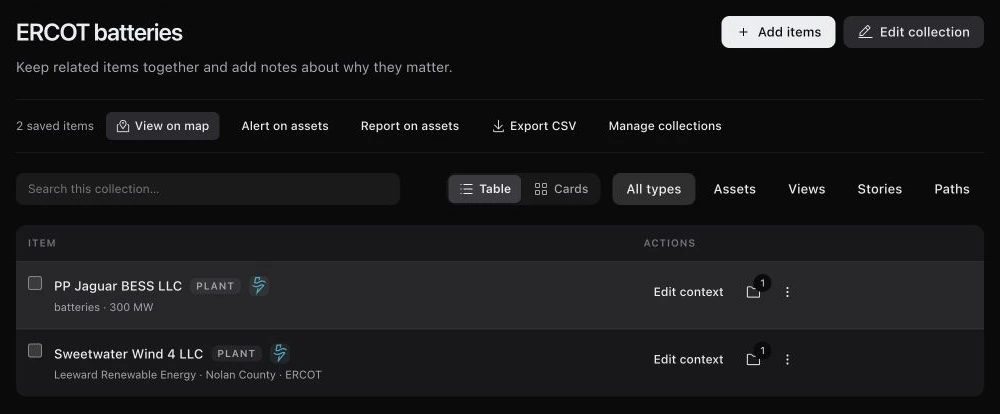
Group assets, map views, stories, and saved paths around a question or portfolio. Collection-specific notes and custom fields preserve why an item matters to that piece of work. The same saved asset can belong to another collection with different context.
A collection with assets offers direct handoffs into the map, alert setup, and report setup, plus CSV export. Review each destination’s target and configuration before creating a monitoring rule or schedule.
Carry the collection onto the grid
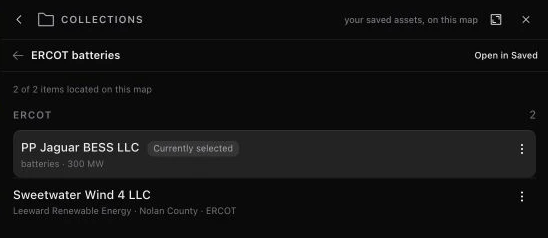
View on map opens the Collections rail, highlights located members, and keeps the collection available while you inspect ordinary asset cards. The rail marks the currently selected asset and identifies how many members are located in the current market.
Items from other markets and saved references keep their own place in the collection. The grid agent can retrieve your current saved library and collection context, so subsequent questions can refer to the assets and notes you have already organized.
Give someone the answer and its starting point
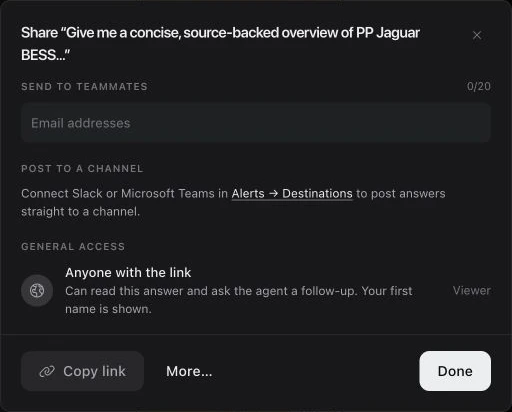
Share latest answer creates an unlisted, read-only snapshot of the newest finished answer. It includes the question, answer content, charts and cards, and the map view from the investigation. Anyone with the link can read it; your first name is shown.
Copy the link, send it to named teammates, or post through a connected Slack or Microsoft Teams destination. The recipient’s follow-up starts their own conversation with the shared answer attached. Other turns from the original conversation are outside the shared snapshot.