FERC Wants Faster Gas Reviews. One Power-Plant Pipeline Still Targets 2029.
A proposed change to air-quality analysis could shorten one part of pipeline permitting. Kentucky, Transco and New England show how much still has to happen before more gas becomes dependable power.
The distance between a gas permit and a working power plant was visible in FERC’s own October 15 meeting. Alongside its proposal to change natural-gas environmental reviews, the commission authorized Columbia Gulf’s Pulaski Project: 260,000 dekatherms per day of firm transportation for East Kentucky Power Cooperative. The pipeline developer’s schedule still puts gas service in the first quarter of 2029. FERC certificate order; TC Energy schedule.
That is the practical question behind the announcement. A shorter review could bring a needed fuel connection closer. Whether it brings dependable electricity closer depends on which project is waiting, what the pipeline actually serves, and the work that follows authorization.
FERC’s October 15 draft policy statement, in Docket PL26-3-000, addresses one specific part of that process: how the agency assesses operational air-quality effects when reviewing Natural Gas Act projects. It proposes to stop routinely requesting and relying on air-dispersion modeling and to use other applicant and staff information instead. FERC is accepting comments on implementation through November 16, 2026. It describes the action as a draft policy statement; the announcement does not establish a final effective date.
The change is inside the environmental review
Current approach
Model the local air
Assess how facility emissions disperse and combine with background pollution. Compare modeled concentrations with air-quality thresholds.
Proposed approach
Use a different evidence base
Use equipment, emissions estimates, mitigation and other applicant or staff information. Generally use compliance with Clean Air Act requirements to support a less-than-significant NEPA finding.
The proposal removes the routine modeling request. Voluntary modeling and modeling needed for separate Clean Air Act obligations can still enter the record, under the draft and Swett’s concurrence.
What would change in an air-quality review#
Air-dispersion modeling answers a location-specific question. Given a compressor station’s or LNG facility’s emissions, nearby pollution sources, terrain and weather, what concentrations might people encounter around the facility? An equipment emissions inventory answers a different question: how much of each pollutant the equipment is expected to release. Both concern air quality, but they carry different information about exposure. EPA’s modeling overview.
In her dissent, Commissioner Judy Chang describes FERC’s current method as a sequence of screening and, where needed, more detailed modeling against air-quality thresholds. A project’s modeled contribution is considered with background pollution before the commission assesses whether the effect is significant. Chang argues that this supplies local information that a broader state air-permitting program does not necessarily reproduce.
The draft itself would retain equipment and emissions information, descriptions of existing air quality, and information about controls and mitigation. It says compliance with pertinent Clean Air Act permitting and regulatory requirements would generally support finding operational air effects less than significant for NEPA purposes. That would mean those air effects alone would not require a longer environmental impact statement. It is the commission’s proposed significance approach, not a finding that every project has identical local effects.
The draft also says applicants may voluntarily submit dispersion modeling and that FERC would analyze it in the NEPA document. A footnote expressly leaves Clean Air Act General Conformity review unchanged; Swett’s concurrence says staff could still require modeling information needed for those separate obligations. The routine modeling change therefore should not be read as a ban on every use of a model.
Commissioner David Rosner’s concurrence in the same filing supports the change while emphasizing that state air permits should inform FERC’s independent judgment. He asks commenters whether applicants should file the same materials in the FERC docket that they submit to state regulators. That is a practical issue for anyone evaluating a project: the underlying assumptions need to be available in the record if they are to explain a permit decision.
The legal disagreement is consequential for both developers and neighbors. Swett argues that repeated modeling requests consume months while duplicating the work of air regulators. Chang argues that removing the routine analysis leaves FERC and the public with too little information about local effects, creating grounds for appeals that could delay projects. These are competing expectations about how the new approach would perform. The draft gives no numerical estimate of review time saved.
The relevant measure of success is the time it takes a sound authorization to become usable infrastructure. A shorter environmental document helps if it resolves a task that is holding up the project and produces a decision that survives review. If another permit, a construction window or equipment delivery controls the schedule, accelerating this task may change little about the date gas arrives.
Why the electricity system cares#
Gas supply matters to electricity in two distinct ways. Existing generators need fuel delivered when they are called to run. New gas generators need a physical connection and transportation arrangements that are ready when the plant is commissioned. A pipeline expansion can help either job, but its beneficiaries depend on the delivery points and customers in the project’s contracts.
The scale is substantial. Ask the Grid’s latest available operating-generator snapshot, the preliminary August 2026 EIA-860M inventory, contains 16.5 GW of New England nameplate capacity reporting natural gas as its primary fuel. Combined-cycle units account for 14.4 GW across 36 plants. The same snapshot contains 104.7 GW of gas-primary nameplate capacity in PJM. These are installed equipment ratings in a lagged inventory; actual capability on a particular day depends on fuel, maintenance and operating conditions.
A large fleet depends on gas reaching the plant
New England
16.5 GW nameplate
- Combined cycle
- 14.40 GW
- Combustion turbine
- 1.81 GW
- Steam turbine
- 0.17 GW
- Other gas
- 0.10 GW
- Engine
- 0.06 GW
PJM
104.7 GW nameplate
- Combined cycle
- 64.56 GW
- Combustion turbine
- 29.35 GW
- Steam turbine
- 10.29 GW
- Engine
- 0.44 GW
- Other gas
- 0.04 GW
That fleet gives pipeline decisions grid significance without making every new gas project a power project. A line serving local distribution companies has a different commercial role from a lateral dedicated to a generating station. More regional supply may help several customers, but allocating all of an expansion’s capacity to electricity would overstate the case.
Three projects show where the policy would meet reality#
The most useful comparison is project stage. One project is described by FERC in pre-filing, another received a certificate vote at the October meeting, and a third obtained its certificate in January. They illustrate different ways a change in environmental review could matter. They are not a sample from which to estimate a national permitting benefit.
A faster review reaches one step in a longer project
Application to certificate, then construction to gas service, on one calendar.
Transco SSE
CP25-10 · 1,597,000 Dth/d
Filed → certificate
457 days
Construction → service
As early as Q3 2027
Pulaski
CP26-11 · 260,000 Dth/d
Filed → certificate
Certificate Oct. 15, 2026
Construction → service
Sponsor target Q1 2029
Algonquin AGT
PF26-7 · pre-filing
Staff information request
Aug. 18, 2026
Transco SSE
CP25-10 · 1,597,000 Dth/d
- Oct 29, 2024 – Jan 29, 2026
Filed → certificate · 457 days - Feb 25, 2026 – Sep 30, 2027
Construction → service · As early as Q3 2027
Pulaski
CP26-11 · 260,000 Dth/d
- Oct 15, 2025 – Oct 15, 2026
Filed → certificate · Certificate Oct. 15, 2026 - Jan 1, 2027 – Mar 31, 2029
Construction → service · Sponsor target Q1 2029
Algonquin AGT
PF26-7 · pre-filing
- Aug 18, 2026
Staff information request · Aug. 18, 2026
Pulaski: a clear connection to power, with years still ahead#
Columbia Gulf’s Pulaski Project, CP26-11-000, is the clearest link between pipeline approval and specific generating equipment. FERC’s October 15 certificate order authorizes facilities in Lincoln and Pulaski counties, Kentucky, to provide 260,000 Dth/day of firm transportation for East Kentucky Power. TC Energy says the project supports the planned expansion of the cooperative’s John Sherman Cooper Power Station. FERC certificate order; project description.
The order also shows why the proposed modeling change cannot explain this approval. Its environmental discussion says operational emissions from the pipeline facilities would be limited to fugitive emissions and would not significantly affect air quality. It adopts mitigation and environmental conditions, including written authorization before construction and before service. Pulaski therefore illustrates the remaining steps after a certificate; it does not establish a time saving from changing how FERC models compressor emissions. Chang’s dissent also recognizes that projects without new incremental operational emissions may be little affected by the change. Certificate order, environmental analysis and appendix; policy filing and dissent.
The cooperative’s generation plan calls for a 745 MW combined-cycle addition at Cooper Station and conversion of the existing Unit 2 boiler to use coal or natural gas. Those are separate changes to generating equipment. The pipeline’s transportation quantity is not an extra 260,000 units of electric capacity, and the certificate does not place the new power unit in service.
TC Energy’s published schedule targets a notice to proceed and pipe-yard work in the first quarter of 2027, main pipeline construction in the first quarter of 2028, and service in the first quarter of 2029. The developer explicitly makes those dates subject to permitting, regulatory review and other factors. The project thus makes a strong case for coordinating fuel infrastructure with power-plant construction. Its October certificate vote cannot be counted as an outcome of a policy proposed at the same meeting.
Transco: the certificate was already issued#
Southeast Supply Enhancement, CP25-10-000, expands Transco’s existing system from receipt points in Virginia to delivery points in Virginia, the Carolinas, Georgia and Alabama. Williams’ August 3 Form 10-Q, page 53 describes 1,597,000 Dth/day of additional firm transportation and a service target as early as the third quarter of 2027, assuming timely receipt of necessary approvals.
FERC’s approved-project register records an application date of October 29, 2024, and a certificate date of January 29, 2026: 457 calendar days. That is elapsed application-to-certificate time across the proceeding, including the work necessary to reach a decision. It does not isolate air-modeling work or measure avoidable delay.
The procedural record continued after the certificate. FERC’s June meeting summary records a February 25 notice authorizing construction and a rehearing decision that sustained the project authorizations while changing the earlier determination about rolled-in rate treatment. For this expansion, construction, remaining approvals and commissioning are the milestones between the certificate and gas service. Removing a routine modeling request from future reviews cannot be credited with issuing the certificate it already has.
Algonquin: a New England expansion with a different customer#
The Algonquin AGT Enhancement Project, PF26-7-000, sits closer to the prospective review question. FERC’s project page describes approximately 13.5 miles of replacement and looping pipeline in Massachusetts and Rhode Island, plus software changes to increase compression at Cromwell, Connecticut. The page describes pre-filing and states that the project has not been approved.
The stated supply beneficiaries are local distribution companies. That matters in a region with a large gas-fired fleet: a regional expansion’s direct customers and contractual rights determine who can rely on the new service. A claim that this project would unlock a specified number of power-plant megawatts would need a documented connection to those generators.
The docket provides a more specific view of the air-quality work. In an August 18 staff letter, page 4, FERC asked Algonquin to supply the existing air permit showing that the Cromwell horsepower increase was covered, the existing potential-to-emit emissions and any changes, and any dispersion modeling the state required for that permit. Staff’s letter calls the proposal the Algonquin Reliable Affordable Resilient Enhancement Project.
That request shows why changing FERC’s routine modeling practice would not eliminate all air-quality work from this project’s record. State permit requirements would remain, and the draft would still allow applicants to submit modeling prepared for those permits. The letter does not establish whether additional federal modeling was needed or controlled the schedule. How the proposed method would apply to a pending project remains an implementation question.
The existing pipes show why location matters#
Project announcements describe future capability. Pipeline bulletin boards show another part of the system: the quantities scheduled at individual points and the capacity posted as available for a gas day. We examined the same evening nomination cycle over the 30 gas days from September 15 through October 14 at two Algonquin delivery locations labeled for Connecticut power plants.
Two power-plant delivery points, two different readings
Algonquin EBB · evening cycle · September 15–October 14, 2026 · Dth per gas day
CPV Towantic
Lake Road
The CPV Towantic posting reported zero operationally available capacity on three of 28 observed gas days. On October 14, it showed 148,603 Dth scheduled, zero posted available and an operating-capacity field of 137,000 Dth. The scheduled field can exceed the posted operating field in this snapshot. We retain both source values rather than treating their difference as spare capacity.
The Lake Road delivery location reported positive available capacity on all 29 observed gas days. Its October 14 posting showed 102,365 Dth scheduled and 133,281 Dth available, against 235,646 Dth operating capacity. Towantic also reported zero scheduled quantity on October 4 through October 9. Together these observations show why one full-looking meter cannot describe the state of an entire pipeline or a region.
The quantities are nominations, not measurements of gas delivered or fuel burned by a generator. A zero-availability posting can guide the next investigation, but it does not establish that a plant lost fuel or curtailed electricity. That conclusion would need the relevant transportation rights, upstream conditions, pipeline notices and plant operating evidence. The two locations are also examples on the existing Algonquin system; these postings do not establish that the proposed AGT Enhancement would relieve either one.
What to expect next#
The first decision is procedural. FERC has set November 16 for implementation comments. The useful details will be how the approach applies to pending applications, what information applicants must supply, and how FERC explains significance when it relies more heavily on air-permit compliance. Those details determine whether the policy changes the next data request in a live project.
The next test is the project record. For a future certificate using the new method, compare the actual information requests, environmental-review milestones and remaining permit schedule. If the modeling task was on the critical path, removing it could advance the decision. If the review becomes vulnerable to a successful challenge, the resulting rework could offset that gain. Neither outcome can be measured on announcement day.
For the grid, follow the physical and commercial milestones: a construction authorization, completed pipe and compression, an in-service authorization, transportation service to the relevant customer, and a generator capable of using the gas when the system needs it. Pulaski’s published 2029 service target and Transco’s conditional 2027 target show why those milestones belong beside the policy headline.
A faster gas review can have real value when it advances a needed connection. The cases point to a precise question for the months ahead: which project’s usable service date changes, for which customer, and by how much? That is where the proposed administrative change would become a measurable grid result.
Sources and method#
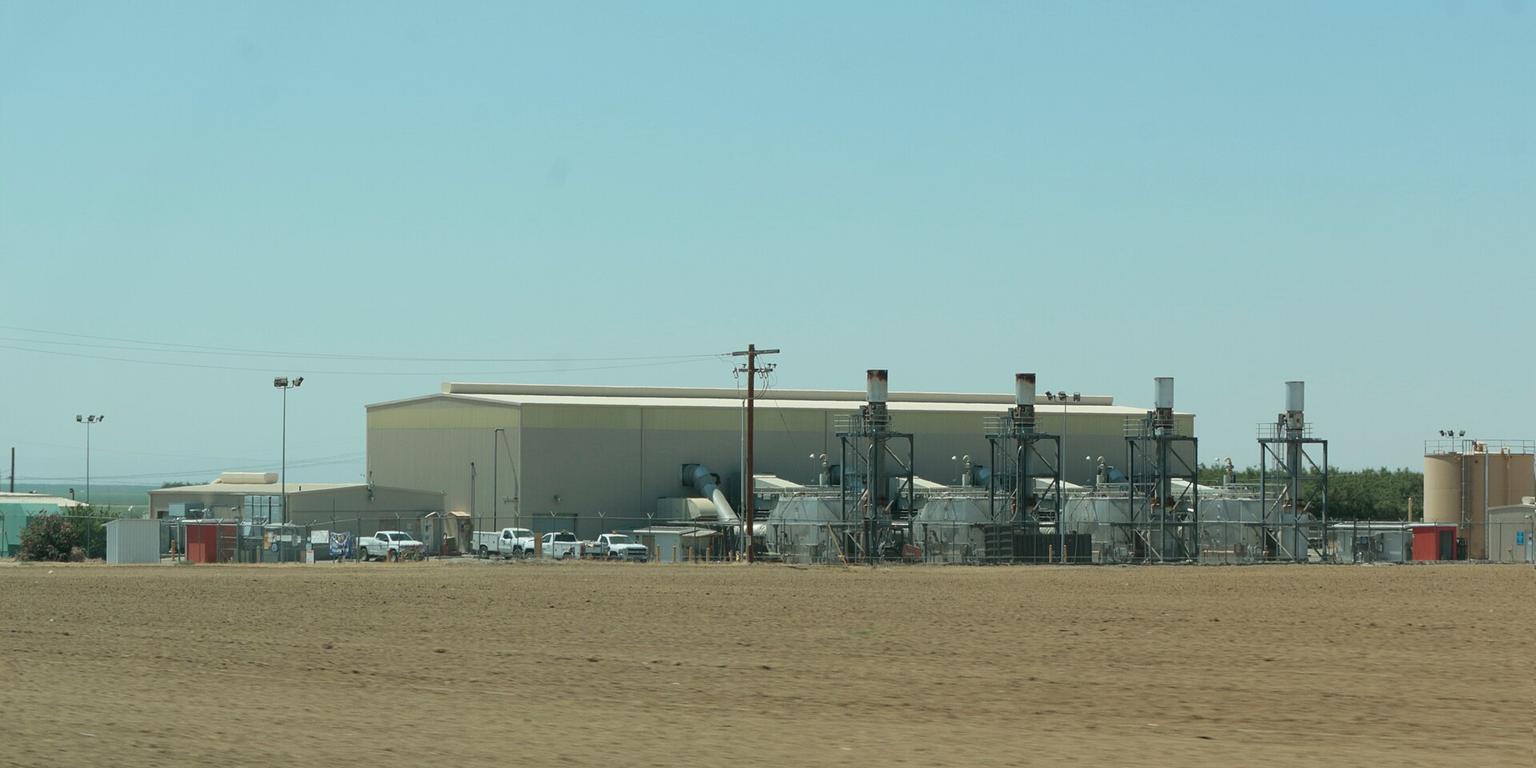
The cover photograph shows TC Energy's Monchy compressor station in Saskatchewan, an illustration of pipeline equipment and not a project discussed here. Photo: Awmcphee, CC BY-SA 3.0, via Wikimedia Commons. Resized.
Policy coverage is based on FERC’s October 15 draft policy statement, accession 20261015-3051, including its attached Swett and Rosner concurrences and Chang dissent, plus the announcement. The knowledge cutoff is 1:53 p.m. Eastern on October 15, 2026. The policy statement is labeled draft; implementation comments are due November 16, and the filing does not specify a final effective date or settle how pending applications would be handled. Pulaski’s native certificate, accession 20261015-3034, was also read. Project stages use the FERC records and dated sponsor disclosures linked above. Sponsor schedules remain estimates. The Algonquin case combines FERC’s May 28 project description with its August 18 staff information request; the stage labels retain those source dates.
Fleet calculations select one exact August 1 inventory snapshot from EIA operating generators, filter balancing authorities ISNE and PJM and primary fuel NG, and sum generator nameplate MW after canonicalization. The source is the preliminary August 2026 EIA-860M workbook. Technology plant counts are distinct within each technology; we do not add them across technologies.
Gas charts use pipeline capacity and scheduled quantities, read with FINAL to resolve repostings, and select Algonquin, delivery direction, evening cycle and the two exact location IDs. Gas-day labels use their source date; the charts use UTC to preserve that date on the axis. Missing days remain gaps. The wider coverage check found 29 evening-cycle gas days for Algonquin and Texas Eastern and 30 for Tennessee and Transco within the same 30-day window. No series is added across pipelines, cycles, serial meters or receipt and delivery directions.
Checking your subscription…