CAISO battery dispatch history
See how California's batteries charge and discharge, their evening output, and estimated energy from five-minute observations. Choose a date to inspect the daily record and compare complete 30-day periods.
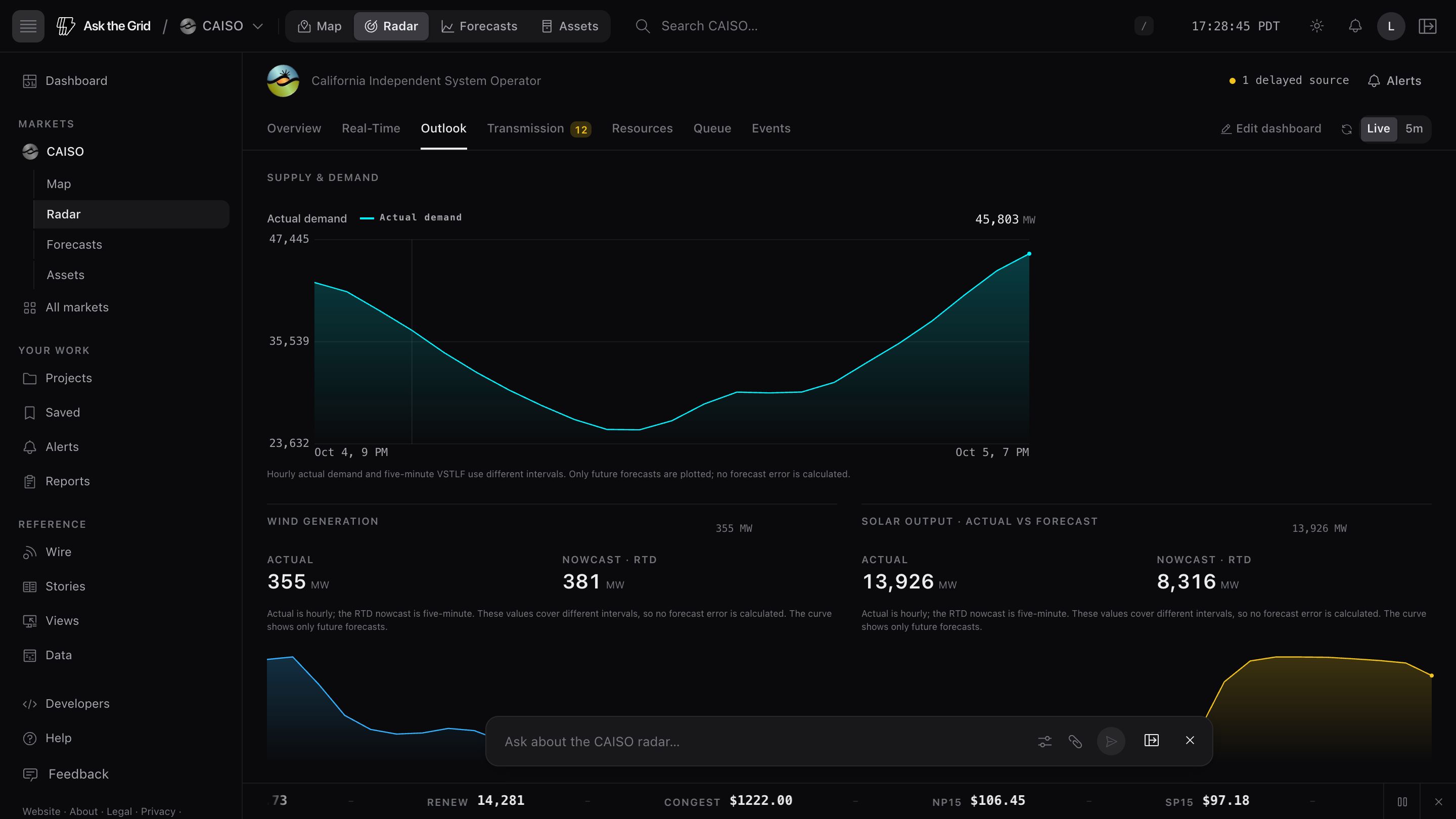
See it on the live CAISO map, updating as the market publishes.
Explore the CAISO gridAbout this view
Charging and discharging
CAISO publishes the fleet's net power in MW. Positive readings mean discharge into the grid and negative readings mean charging. Standalone and hybrid batteries are already included in the fleet total.
Energy and coverage
Daily energy is estimated by multiplying each observed five-minute power sample by five minutes. Missing samples remain gaps. Complete days account for California's 23-hour and 25-hour daylight-saving changes.
Historical comparisons
The 30-day comparison uses two adjacent calendar windows ending on the chosen date. A change is shown only when both windows contain every expected sample. Evening output is the highest observed discharge between 4 p.m. and 9 p.m. Pacific.
Questions
What does a negative battery reading mean?
The fleet is charging from the grid. Charging and discharging energy estimates are shown separately; netting them would hide both activities.
How is daily energy estimated?
Each observed five-minute net-power sample contributes MW divided by 12 to the relevant charging or discharging MWh estimate. The table reports how many expected samples are present.
Does evening output measure avoided blackouts?
It measures observed battery discharge during the 4–9 p.m. Pacific window. Reliability benefits and avoided costs require additional analysis of system conditions.