ISO-NE capacity emergencies this year
How many days ISO-NE has been under a capacity alert, warning or emergency this year, which days they were, how far up the ladder each went, and what is in effect now.
How many days ISO-NE has been under a capacity alert, warning or emergency this year, which days they were, how far up the ladder each went, and what is in effect now.
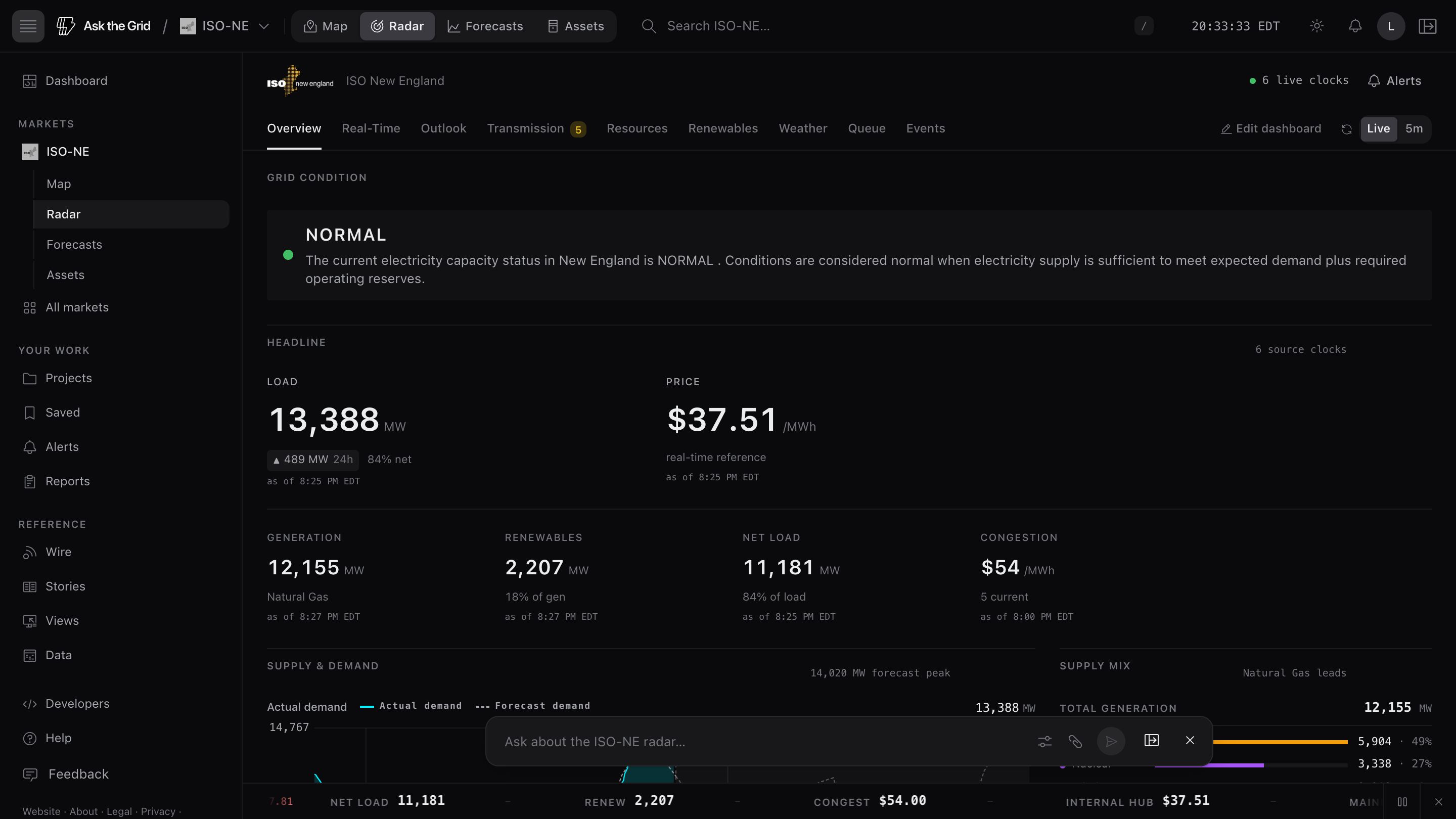
In effect now
Normal
No capacity declaration across the footprint
EEA days since May 21
0
NERC Energy Emergency Alert, any level
Warning or emergency days since May 21
0
0 days with any capacity alert · 0 covered all of ISO-NE
Ask the Grid's record of ISO-NE's postings begins May 21, 2026; earlier days this year are not counted.
| Alert or higher | 0 |
| Warning or higher | 0 |
| Emergency action or higher | 0 |
| Load shed or higher | 0 |
| EEA 1 or higher | 0 |
| EEA 2 or higher | 0 |
| EEA 3 | 0 |
Market days with a capacity declaration anywhere in ISO-NE. Drills are left out.
ISO New England declares M/LCC 2 Abnormal Conditions when the system is at risk, then Operating Procedure 4 actions for a capacity deficiency, which run alongside NERC EEA levels, and OP-7 for load shed.
A day counts when a capacity declaration at alert or above covers any part of it, in the market's own time zone, whether it covered the whole footprint or one region. Each day takes the highest step and NERC EEA level declared that day, and overlapping or renewed postings count once. Drills are never counted.
Every operator names its steps differently. Ask the Grid places each on one ladder, advisory, alert, warning, emergency action and load shed, with the NERC EEA level the operator states or its procedure defines, so a day here means the same thing in every market.
The EEA counts at the top of this page say, with each day it was declared. They come from ISO-NE's own postings and update within minutes of a new one.
An alert says supply may be tight ahead of time. A warning says reserves are short or about to be. An emergency action means the operator is already using emergency resources, and load shed means it is cutting load to protect the grid.
A balancing area or region under an EEA is the market under an emergency there. The page shows how many days covered the whole footprint separately, and marks each declaration with where it applied.
| From | ISO-NE's notice | Level | Applies to |
|---|
| Aug 7, 2026, 9:00 AM EDT | M/LCC 2, Abnormal Conditions | Alert · other | All of ISO-NE |
| Jul 1, 2026, 5:16 PM EDT | M/LCC 2, Abnormal Conditions | Alert · other | All of ISO-NE |
| Jun 11, 2026, 12:00 PM EDT | M/LCC 2, Abnormal Conditions | Alert · other | All of ISO-NE |
Capacity declarations anywhere, and footprint-wide notices of other kinds, newest first. Local transmission relief postings are left out.
From the first ISO-NE posting Ask the Grid recorded. If that is later than January 1, the page says so, and days before it are not counted.
What Ask the Grid's detectors found in ISONE's published data over the last two weeks, the most material episode of each kind per day.
Nothing material in the last two weeks.