A private operating layer for your organization.

Scope a deployment that connects your own network, telemetry, and commercial systems, and reads them beside the live public market — with your internal state and public evidence kept clearly apart.

Your boundaryScoped by deployment
Your systemsConnected per engagement
Your marketPublic + private, labeled
01

Connect your systems

Historians, GIS, and commercial platforms scoped source by source, inside a boundary you define.

02

Run private surfaces

Your topology, telemetry, and work state carried into modeled map, network, and Radar surfaces.

03

Read it beside the market

Private state and live public evidence on one board, each source and timestamp kept labeled.

A private operating model, on the same instrument.

The current prototype demonstrates a synthetic distribution feeder across map, network, and Radar. A deployment adds the validated source boundary and governed data access required for your systems. The grid agent stays beside every surface.

Private map in Ask the Grid
Private map · private layersAsk the Grid
01

Private map

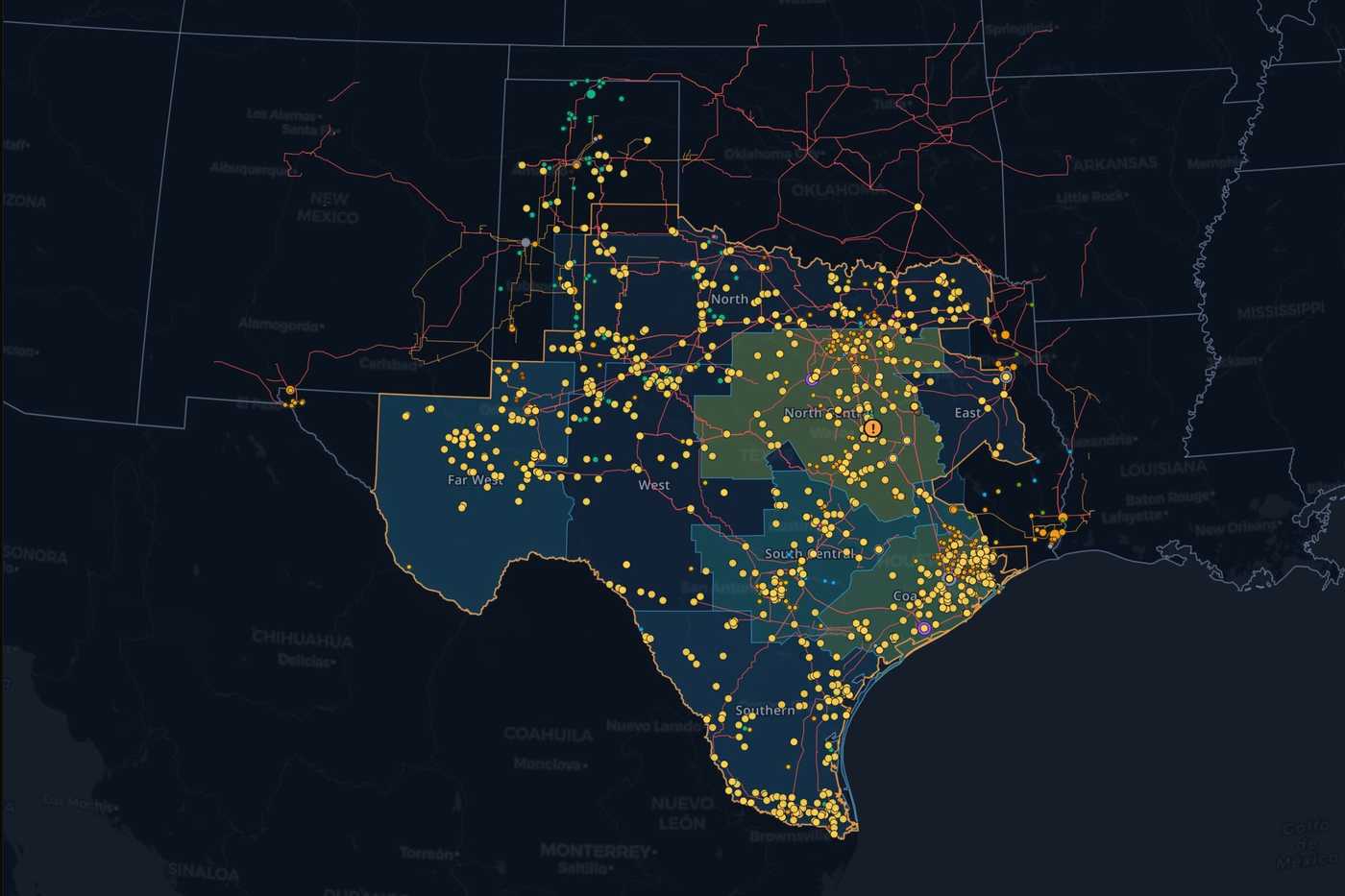
A deployment can place topology, assets, telemetry, and work state on the same geographic surface as the public market.

Grid agent on this surface

The prototype carries the selected asset, geographic focus, and modeled cursor into the question.

See the public surface
Private network in Ask the Grid
Private network · private layersAsk the Grid
02

Private network

A modeled feeder, redrawn as a one-line: source, switches, and downstream share, laid out automatically from topology rather than hand-drawn.

Grid agent on this surface

Carry the selected branch, switch state, and topology context into an illustrative investigation.

See the public surface
Private radar in Ask the Grid
Private radar · private layersAsk the Grid
03

Private radar

Bring private operating signals and public context onto one board, keeping each source and timestamp explicit when their clocks differ.

Grid agent on this surface

Ask from the operating frame while private and public sources remain separately labeled.

See the public surface

Scope the systems you already run.

Connection patterns are designed and validated source by source: identity, freshness, permissions, and operational ownership are part of the engagement.

  • 01

    AVEVA PI

    Operational historians

  • 02

    Esri ArcGIS

    Network & GIS

  • 03

    ION

    Commercial

  • 04

    Your systems

    Custom connectors

What each source class covers4

AVEVA PI

Operational historians

Scope telemetry, availability, and asset state from a PI System.

Esri ArcGIS

Network & GIS

Scope topology, conductors, switches, substations, and service territory.

ION

Commercial

Scope positions, awards, schedules, settlements, and portfolio context.

Your systems

Custom connectors

SCADA, EMS/ADMS, trade capture, and internal databases via scoped connectors.

Named systems illustrate common source classes; connector availability is confirmed during scoping. Public feeds remain source-attributed and separate from private state.

Scope the workloads that need private context.

A Private Grid is designed as more than a view. Connectors, models, and recurring analyses are defined around the deployment boundary, the systems of record, and the review path your team requires.

01

Private connectors

Scope how private feeds enter the deployment boundary, how credentials are held, and how freshness and ownership are validated.

02

Asset & storage programs

Define asset studies or storage programs around your existing models, private inputs, and the live public market.

03

Recurring analysis

Recurring reconstructions, checks, and reports can be designed as scoped private workloads with reviewable outputs.

Illustrative workload — battery dispatch review

Scoped

Boundary

Defined per deployment

Scope

Example BESS fleet

Inputs

Proposed telemetry + market

Output

Reviewable variance

Delivery pattern

Deployment-scoped

ConnectRunReview

The agreed design keeps private inputs inside the deployment boundary while public market evidence remains attributed and independently inspectable.

A deployment boundary you can govern.

Deployment boundary

Define where private data is processed, stored, and separated from public market evidence.

SSO & roles

Scope identity-provider, role, and asset-access requirements with the deployment.

Connection secrets

Keep source credentials inside the agreed boundary, with ownership and rotation made explicit.

Deployment policy

Set retention, residency, and operating controls around the organization's requirements.

How a private grid comes together.

A scoped engagement, not a self-serve toggle — most first deployments start with one market, a small private-data boundary, and one decision that matters.

  1. 01boundary

    Scope

    • market
    • assets
    • decision
  2. 02sources

    Connect

    • PI
    • ArcGIS
    • ION
    • custom
  3. 03controls

    Govern

    • identity
    • secrets
    • retention
  4. 04run

    Operate

    • map
    • Radar
    • review

Scope a private grid for your organization.

Tell us the market, the systems you'd connect, and the decision you're trying to support. We scope the deployment before we quote it — these are operating systems, not seats.