ERCOT negative electricity prices
Track hours below $0/MWh at North, Houston, South, West and Panhandle. Select real-time or day-ahead prices, compare adjacent 30-day windows, and inspect monthly trends and the longest observed negative-price spell with coverage beside every result.
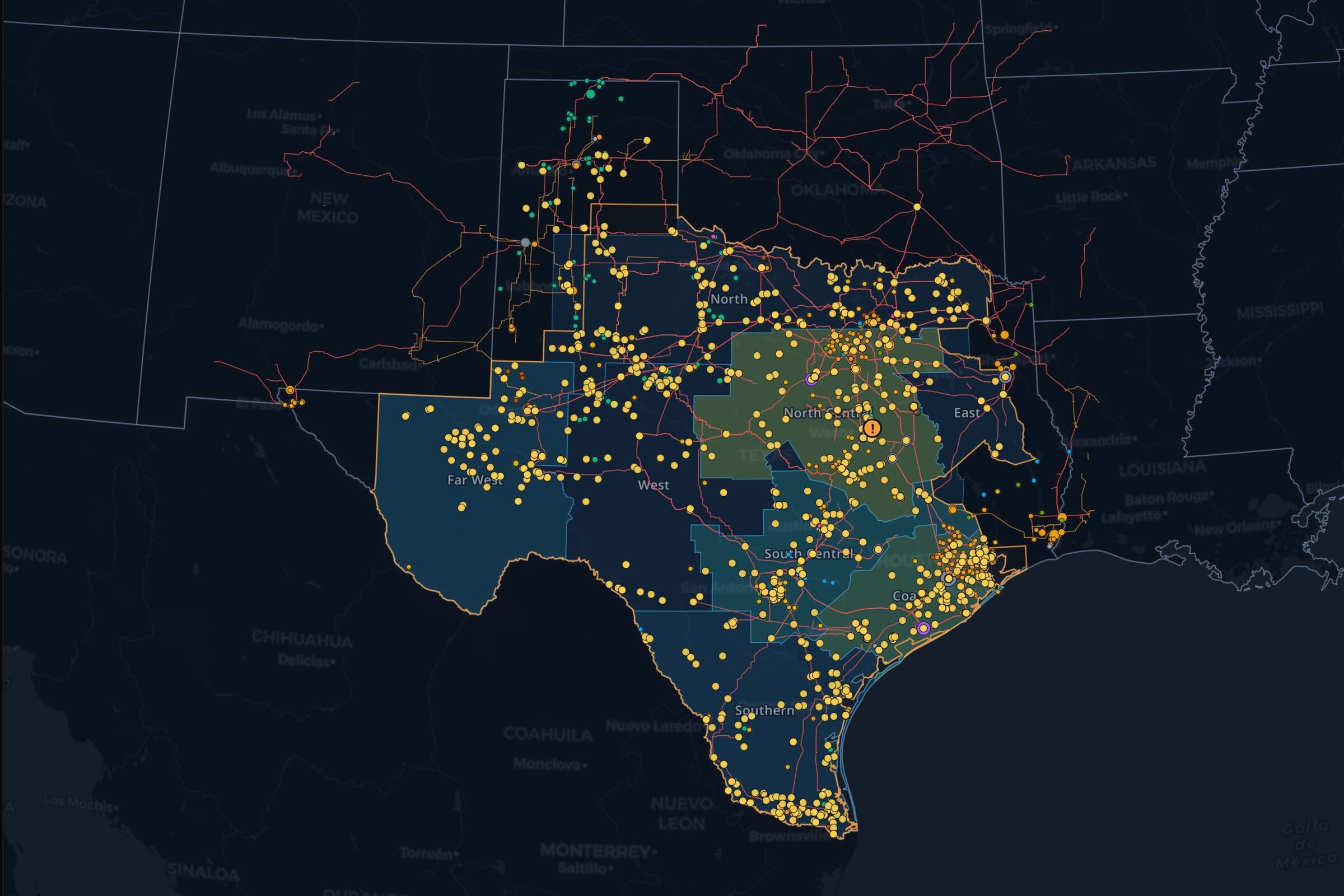
See it on the live ERCOT map, updating as the market publishes.
Explore the ERCOT price mapAbout this view
Count delivery hours at each hub
Real-time observations are resampled to five-minute UTC buckets using the unweighted mean of finite LMP quotes. Extra ERCOT dispatch observations do not add extra hours. Day-ahead prices are hourly cleared values. Delivery dates follow Central time, including 23-hour and 25-hour daylight saving days. The page counts only elapsed delivery hours and keeps future delivery periods out of the historical record.
Compare complete periods
The latest and preceding 30 calendar days are shown separately for each hub. Observed counts and shares remain visible with their priced/expected coverage. A like-for-like share change requires every expected price in both windows. A change in share appears only with complete coverage in both windows, expressed in percentage points so a measured zero baseline stays meaningful.
Market and source context
ERCOT's day-ahead hour-ending stamps are shifted back to the delivery hour before grouping by Central calendar date; real-time dispatch stamps already identify their intervals. Named hubs are kept separate; bus-average and hub-average aggregates are excluded.
Questions
Does zero negative hours mean prices were available?
A zero is shown when priced hours were observed but none were below zero. Missing daily prices show a dash, with the priced/expected-hour count alongside. Observed shares use only priced intervals; a comparable period change requires all expected intervals.
Do negative prices measure renewable curtailment?
They measure the sign of an LMP interval at a named hub. Curtailment requires its own dispatch or operator records, and price data alone does not establish the cause.
How do real-time and day-ahead counts differ?
Use the price-product selector. Real-time uses five-minute bucket-average LMPs and day-ahead uses cleared hourly LMPs. Each negative bucket contributes its stated duration. Missing or null intervals break continuous spells, which can cross midnight.