01
Begin with the asset
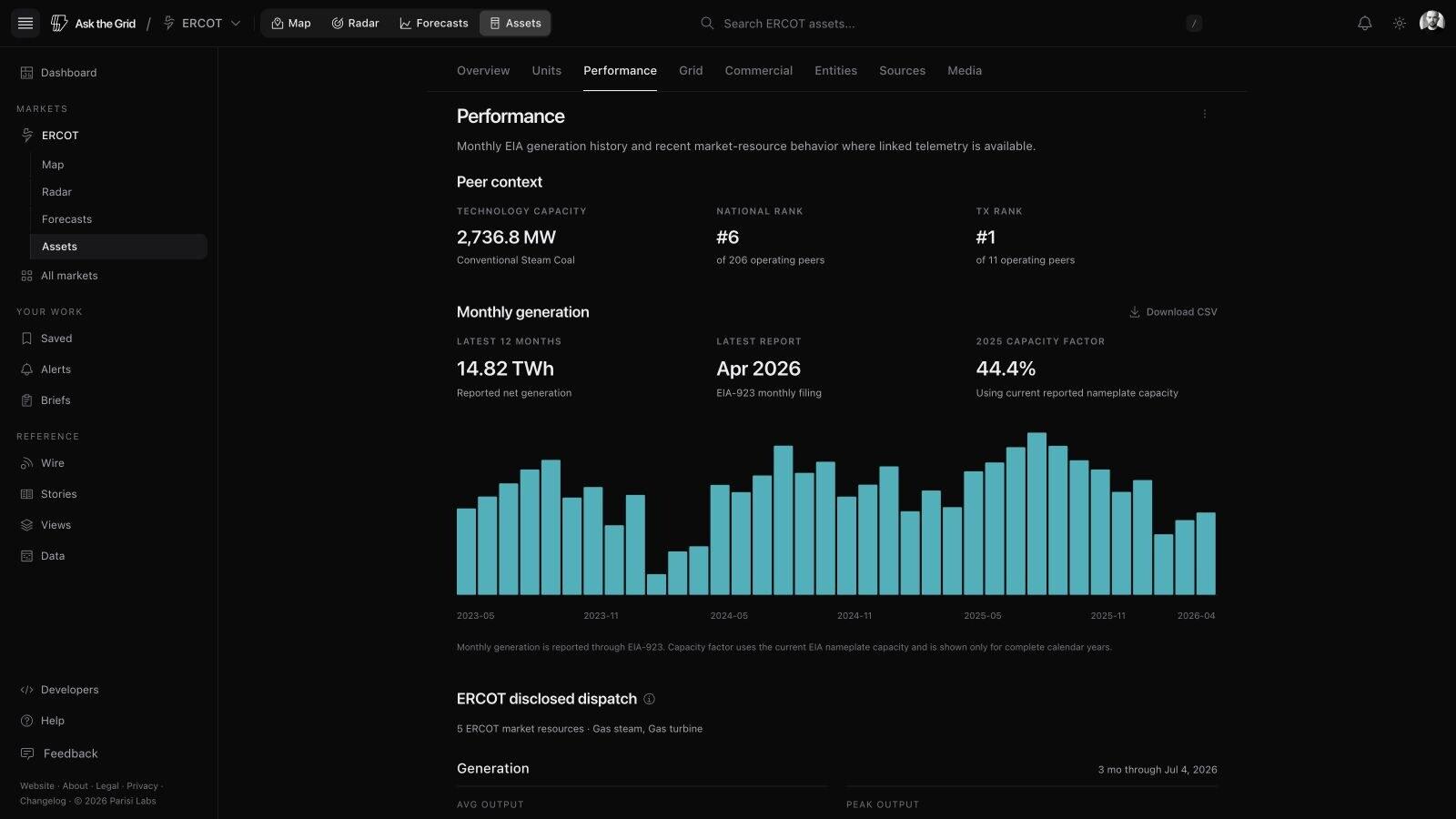
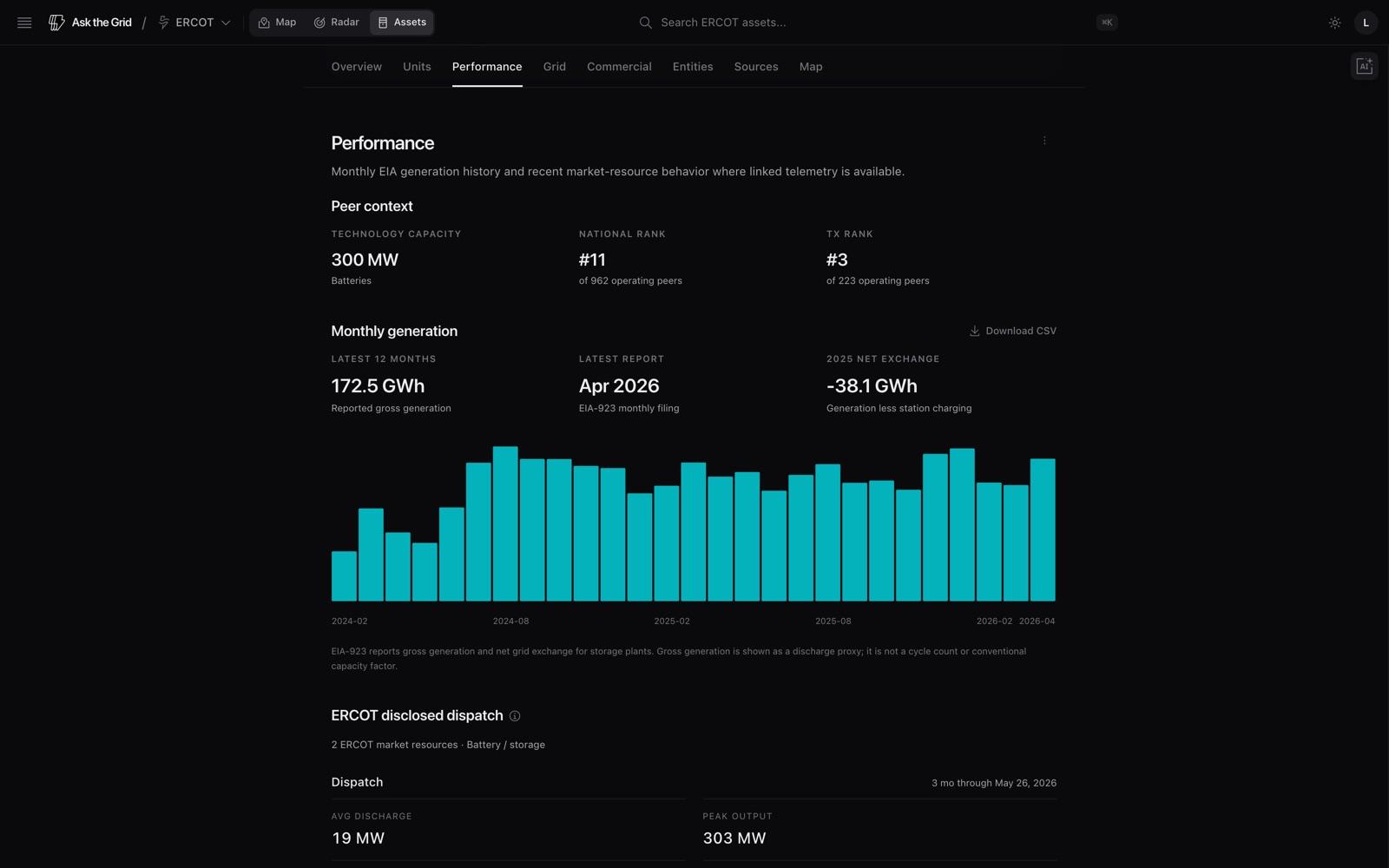
Inspect the plant’s observed generation profile before attributing performance to a market narrative.
Operate the asset inside the market, not beside it.
Join the plant’s observed behavior with prices, congestion, forecasts, weather, and the system events that change the value of the next interval.
When should the asset preserve optionality, respond to the market, or challenge the assumptions behind its current schedule?
System state, physical context, and evidence move together — one surface, shown in full, instead of three separate research tasks.
Inspect the plant’s observed generation profile before attributing performance to a market narrative.
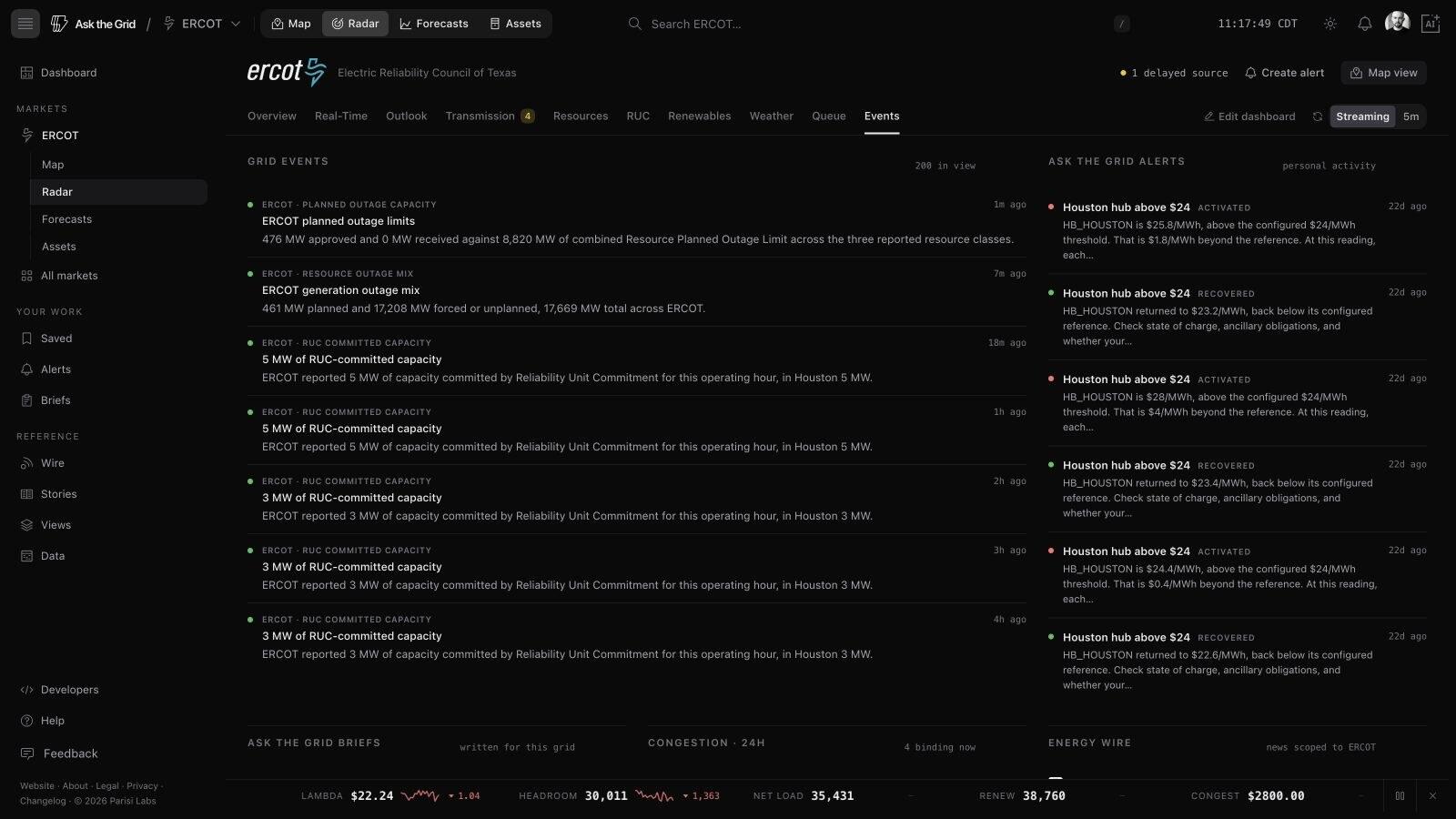
Reconstruct the market conditions around the response and see what the asset was being asked to solve.
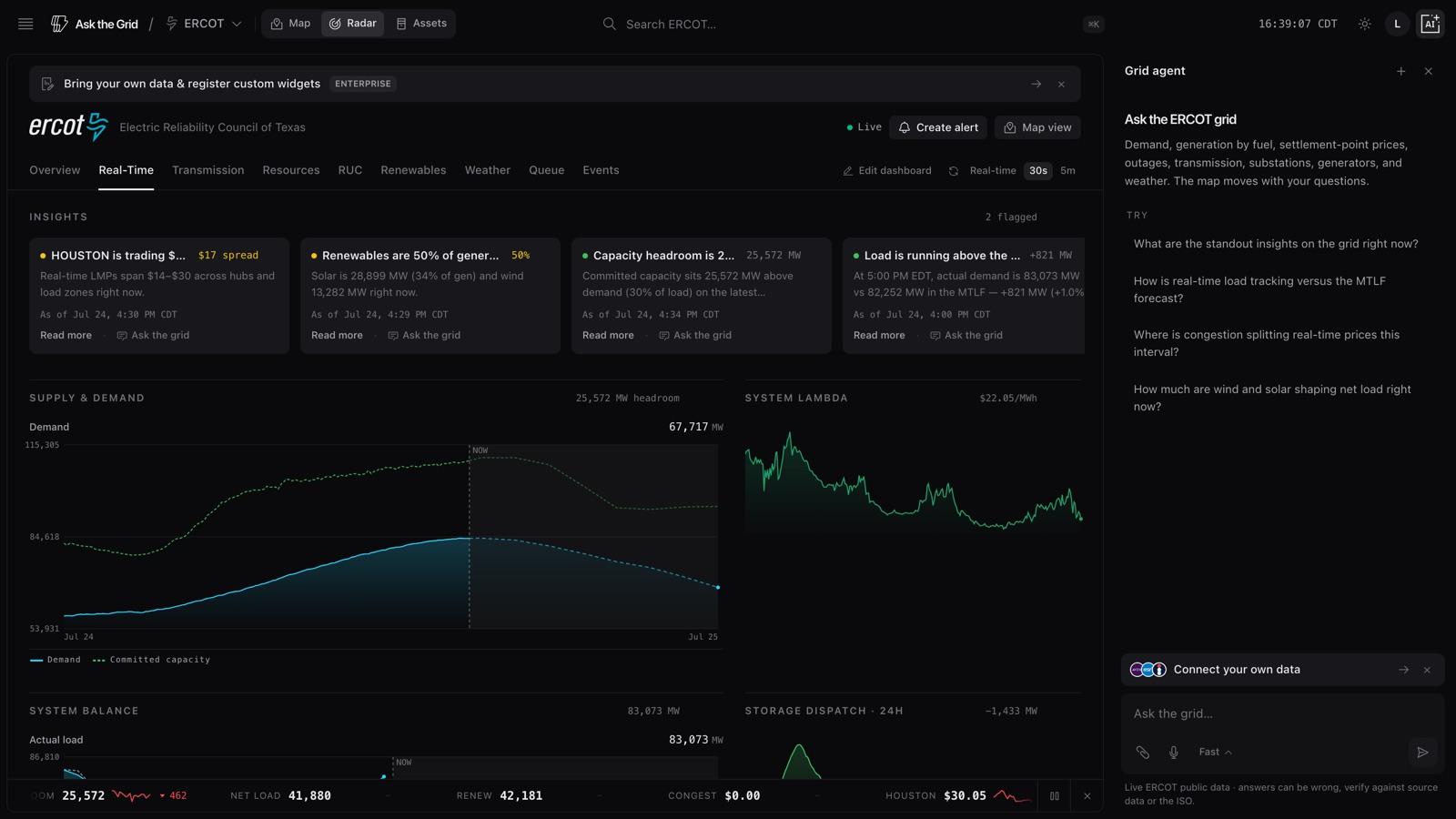
Compare plausible forecast paths before committing scarce state of charge to a single view.
Operating a battery well means reading the asset and the market as one system. Ask the Grid joins observed dispatch to the prices, events, and forecasts that set the value of the next interval.
Per-resource generation, charge and discharge, and observed dispatch for a specific battery — the asset's own record.
Nodal prices and congestion at the plant's own settlement point, not a zonal proxy.
Forecast paths for price and net load to weigh the optionality cost of holding state of charge.
The operating events and notices that reshaped the value of an interval the asset was dispatched into.
Threshold alerts on the prices and conditions that should change a dispatch plan.
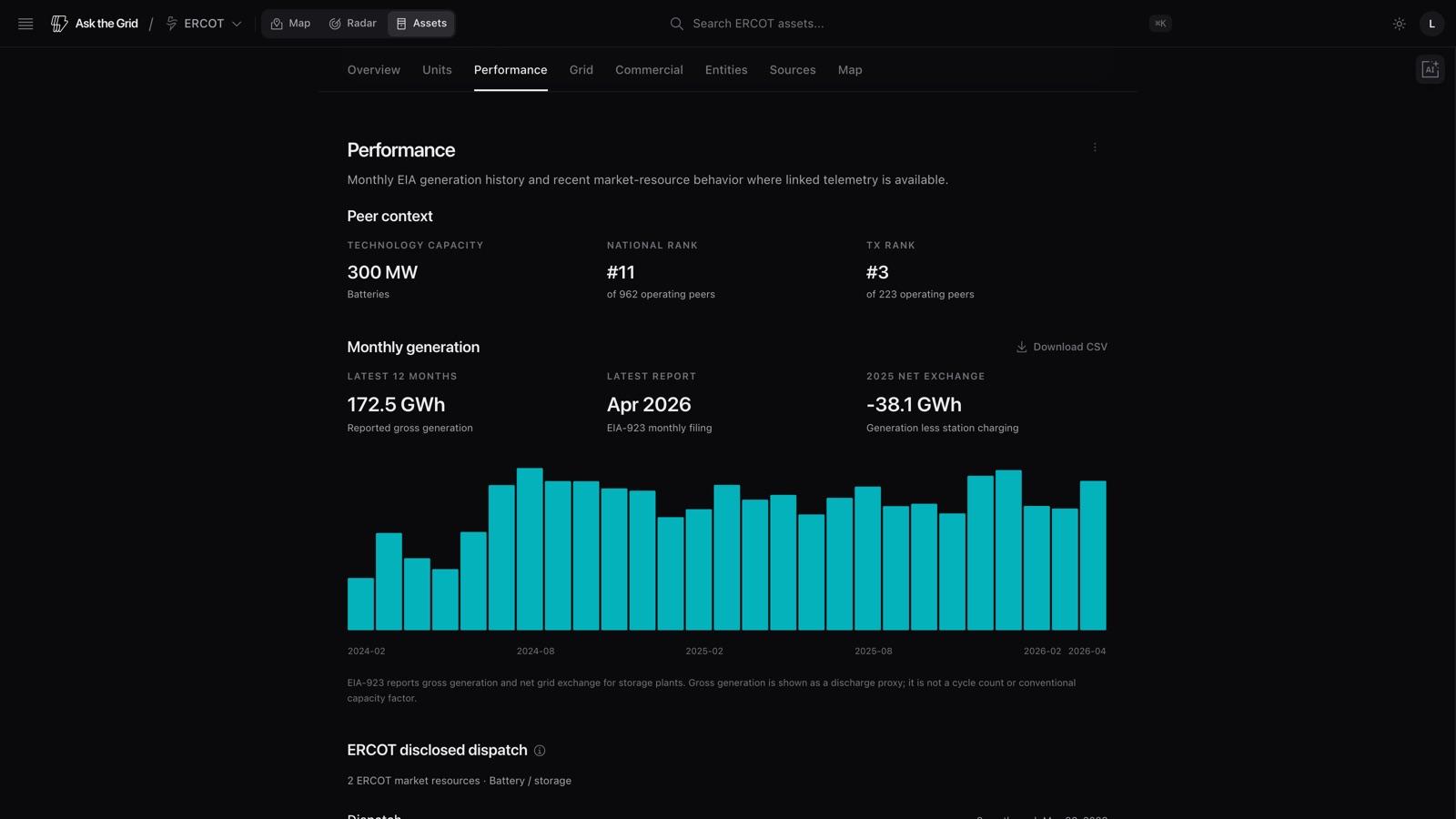
An operating decision connected to asset behavior, system conditions, and the value of retained flexibility.
Asset-level evidence
Market-aware dispatch
Protected optionality