01
Locate the edge
See congestion on the network before reducing the trade to a pair of prices.
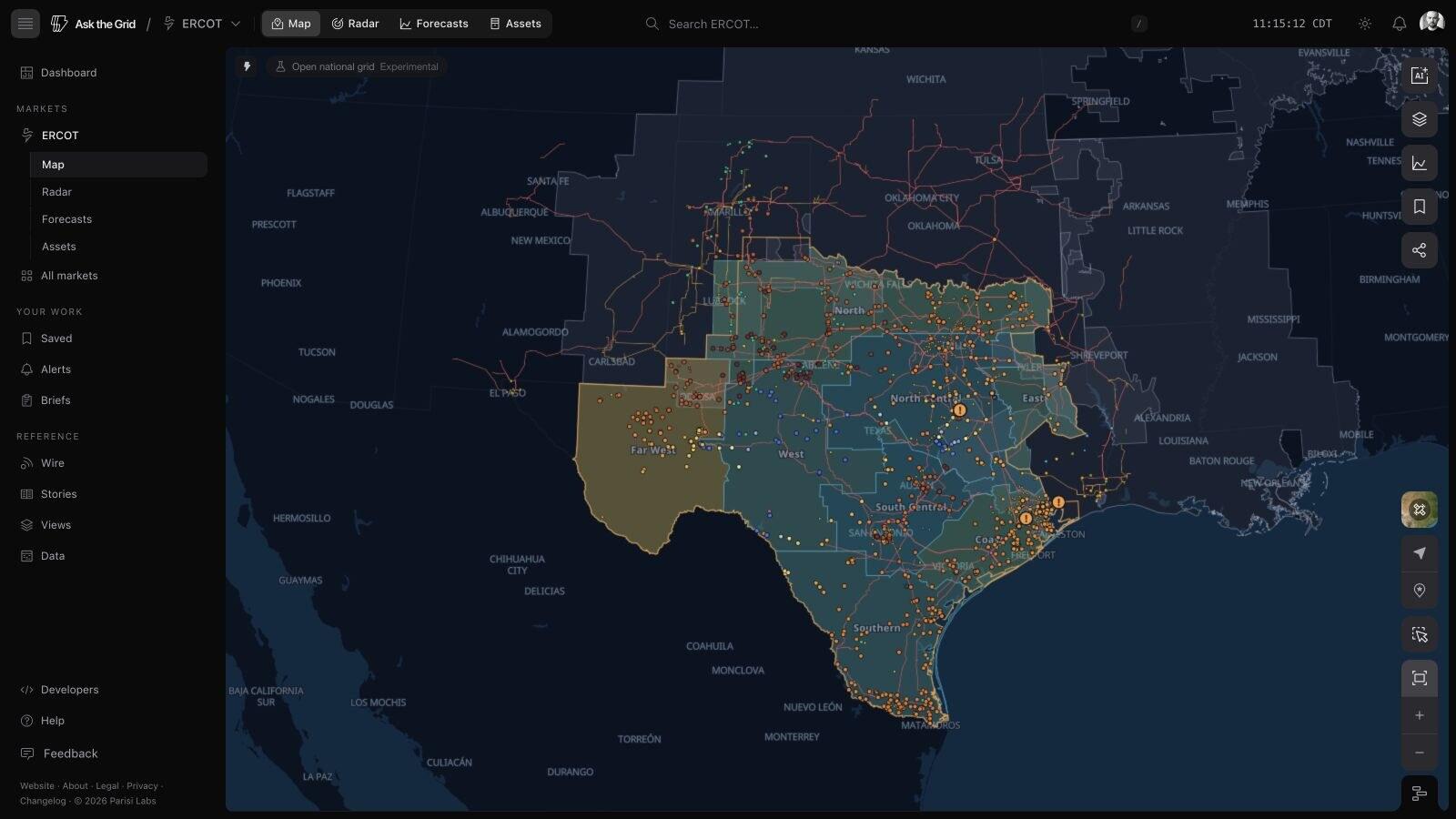
Turn a price separation into a physical explanation.
Move from the node or hub to the constraint, affected resources, weather, and source record while the opportunity is still live.
Is this separation durable, which physical driver matters, and where does the trade stop working?
System state, physical context, and evidence move together — one surface, shown in full, instead of three separate research tasks.
See congestion on the network before reducing the trade to a pair of prices.
Place the constraint beside demand, supply, outages, and other operating signals that may extend or collapse it.
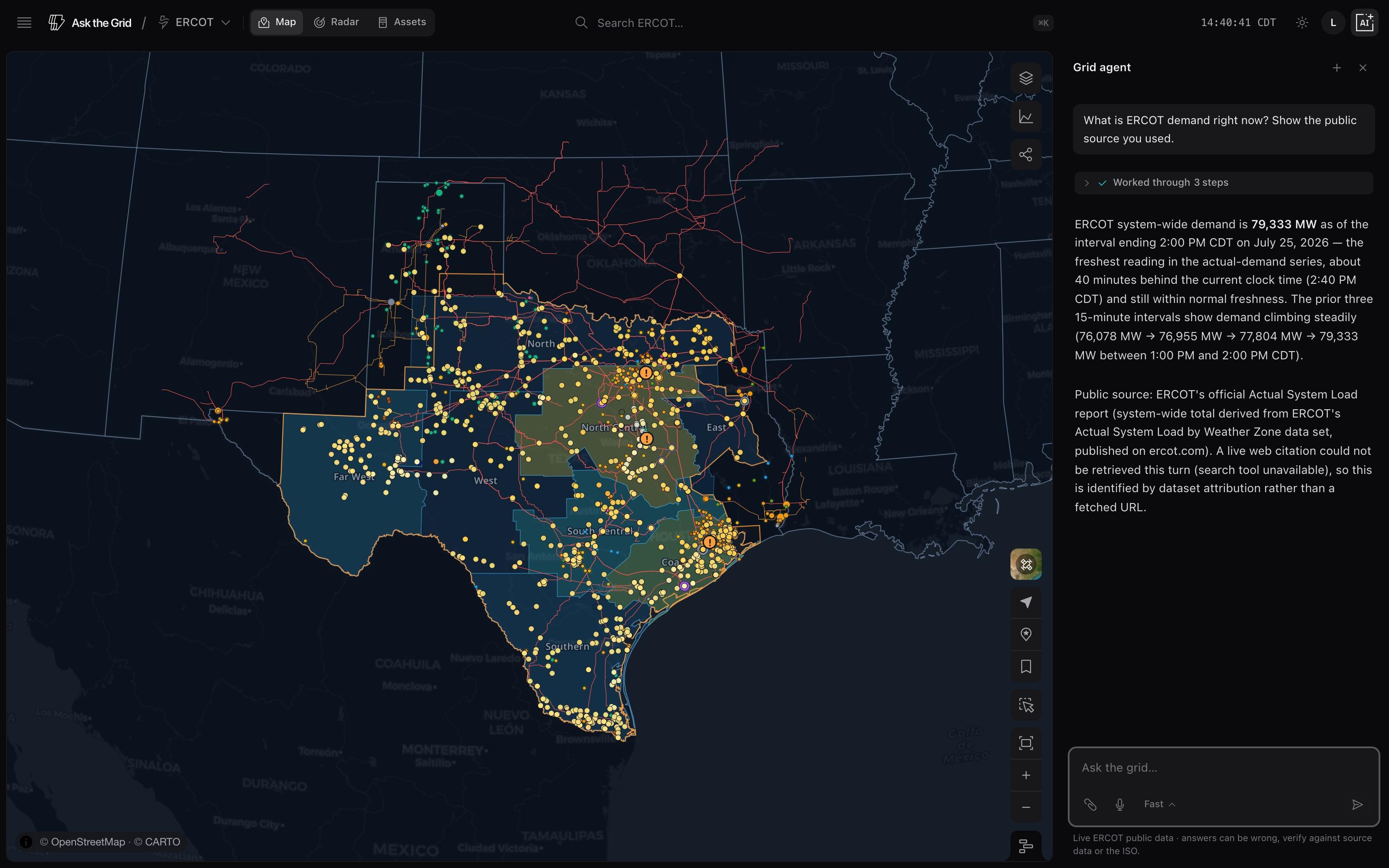
Ask the agent for the evidence behind a move and follow its citations into the underlying releases.
Congestion work moves between the map, the raw feeds, and the answer. Ask the Grid keeps them on one surface so a price separation stays attached to the constraint that produces it.
Congestion, transmission, and nodal prices on one geographic surface — trace a separation back to the line that creates it.
Ask why a node and hub diverged; every figure returns with the source and as-of stamp attached.
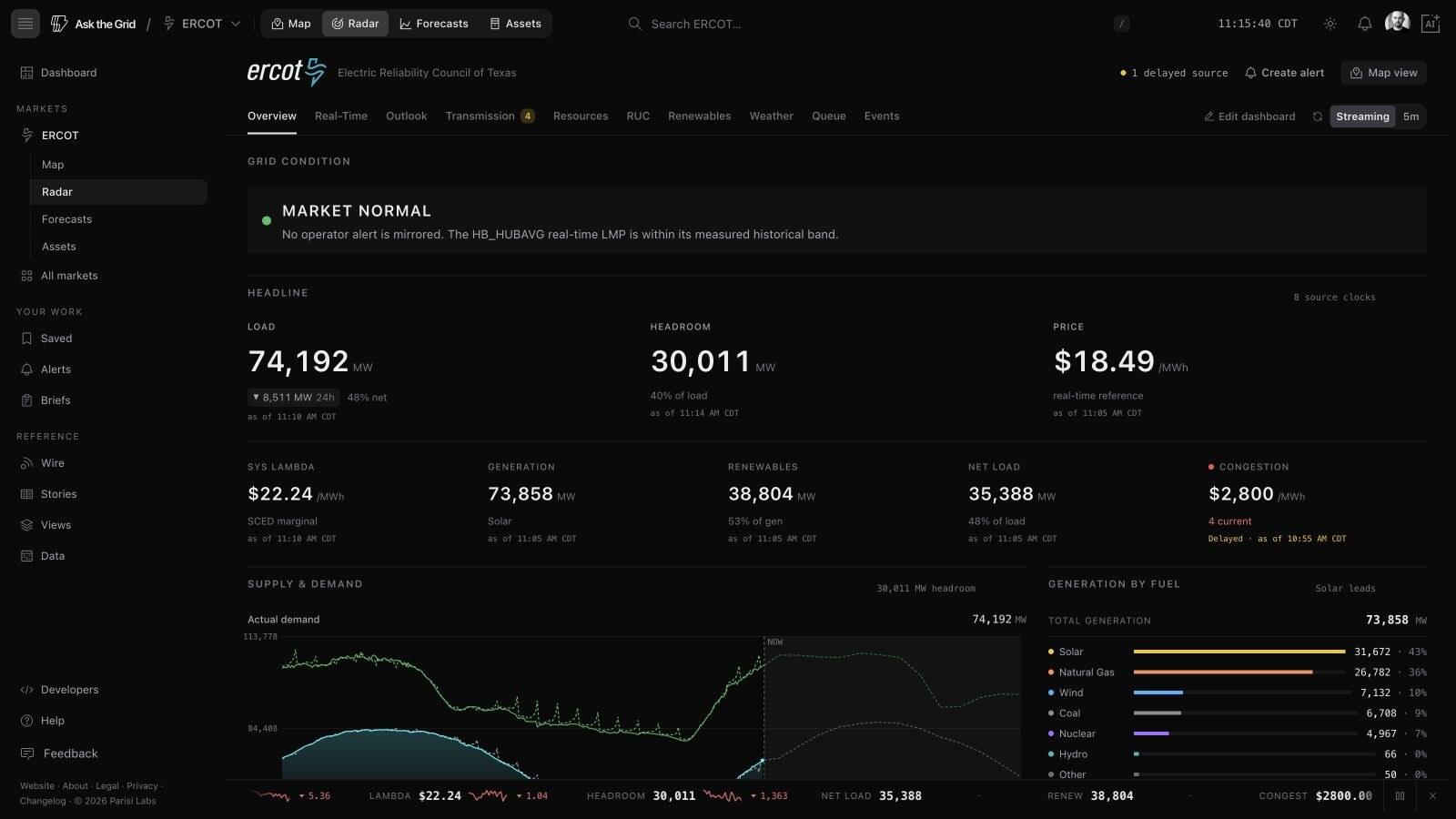
Demand, supply, outages, and constraint pressure in one scan — the context that extends or collapses a spread.
Get told when a constraint starts binding or a settlement point clears past a threshold you set.
LMP by settlement point, SCED shadow prices, and binding constraints — the tables under every congestion move.
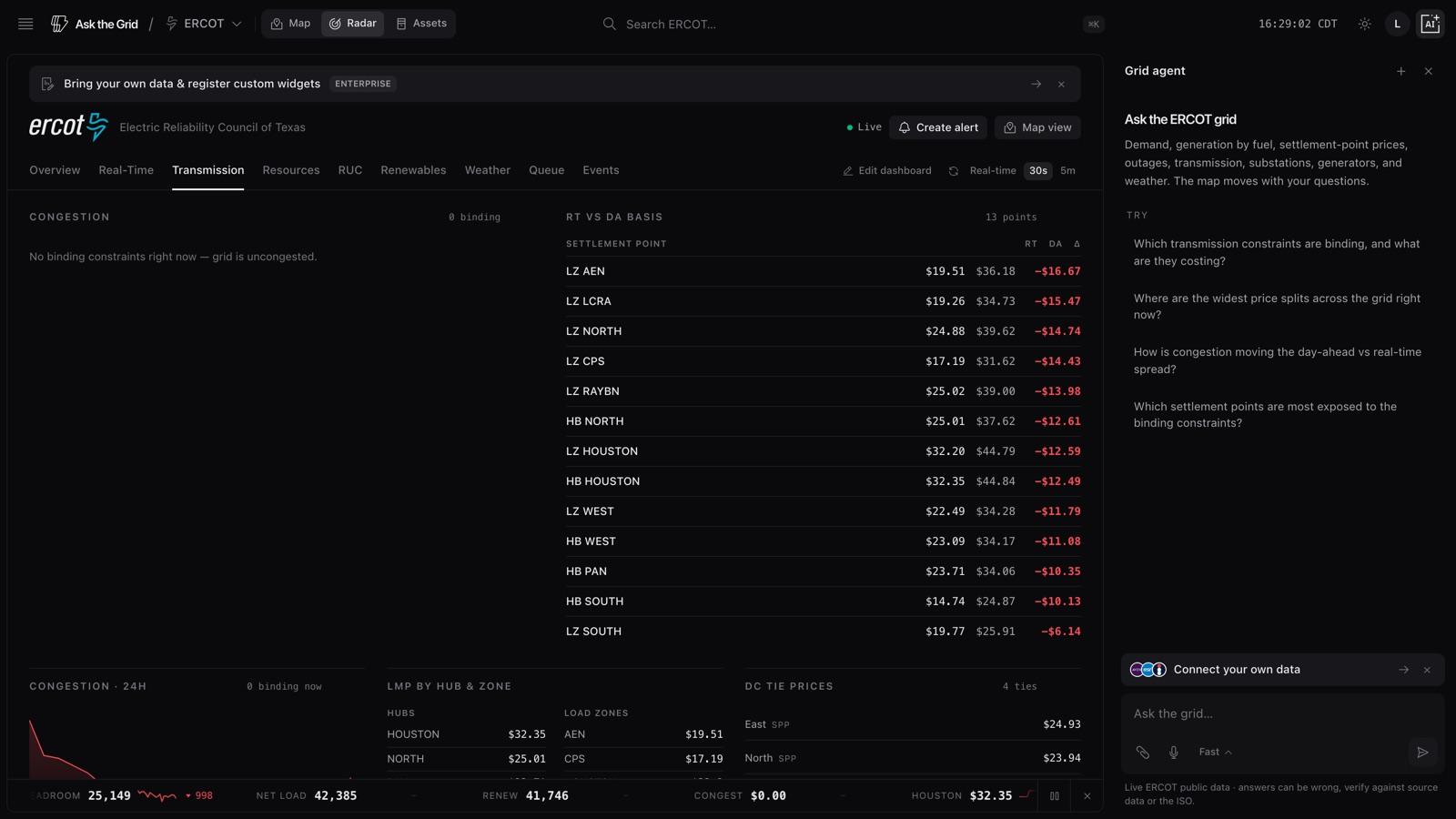
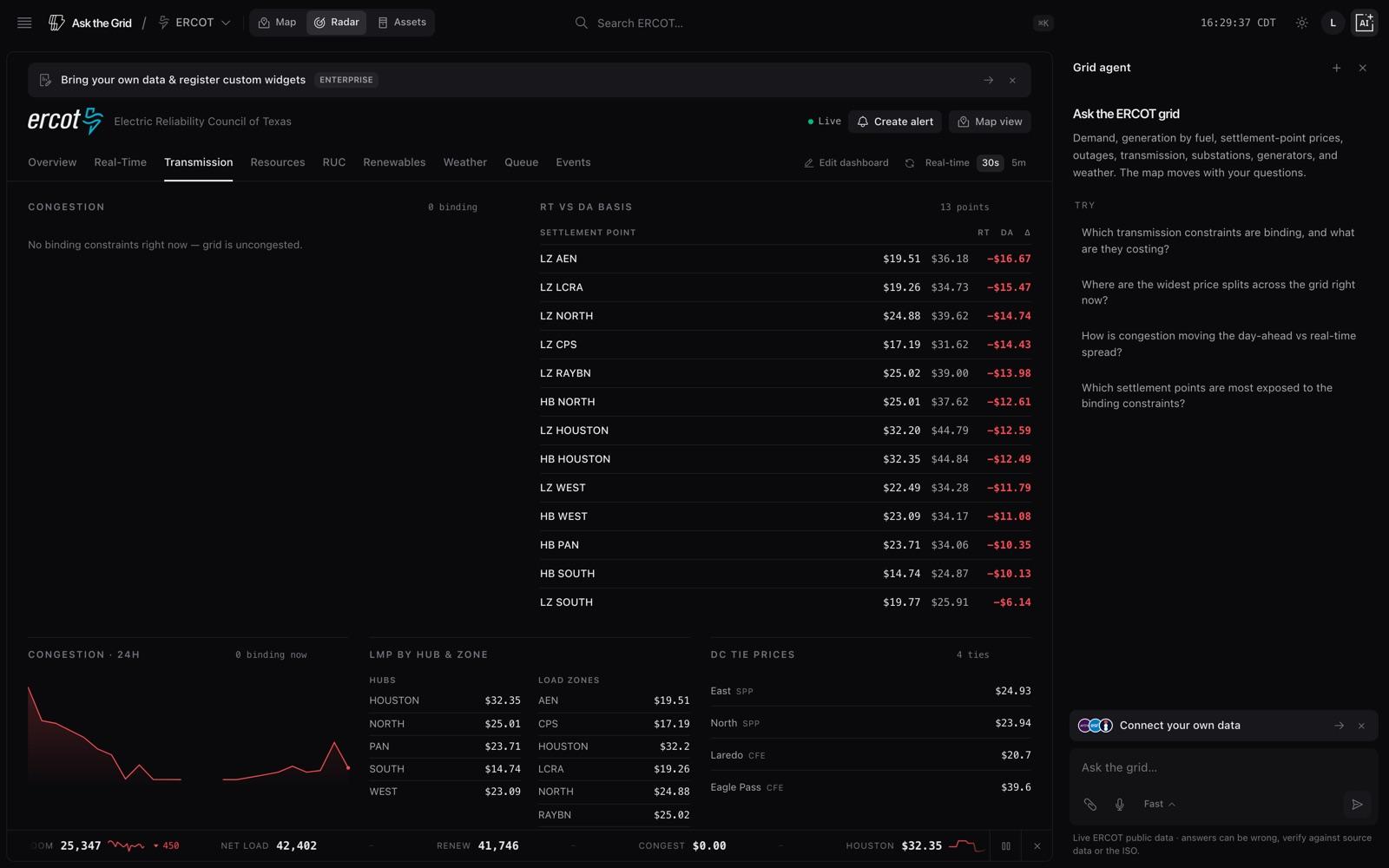
A congestion view that stays attached to the physical driver and the evidence.
Faster attribution
Physical context
Explicit invalidation