The grid,
on the record.
File on deadline with a source you can cite.
Ask what happened on a live grid, get the public dataset and interval behind the answer, and carry the citation straight into the piece.
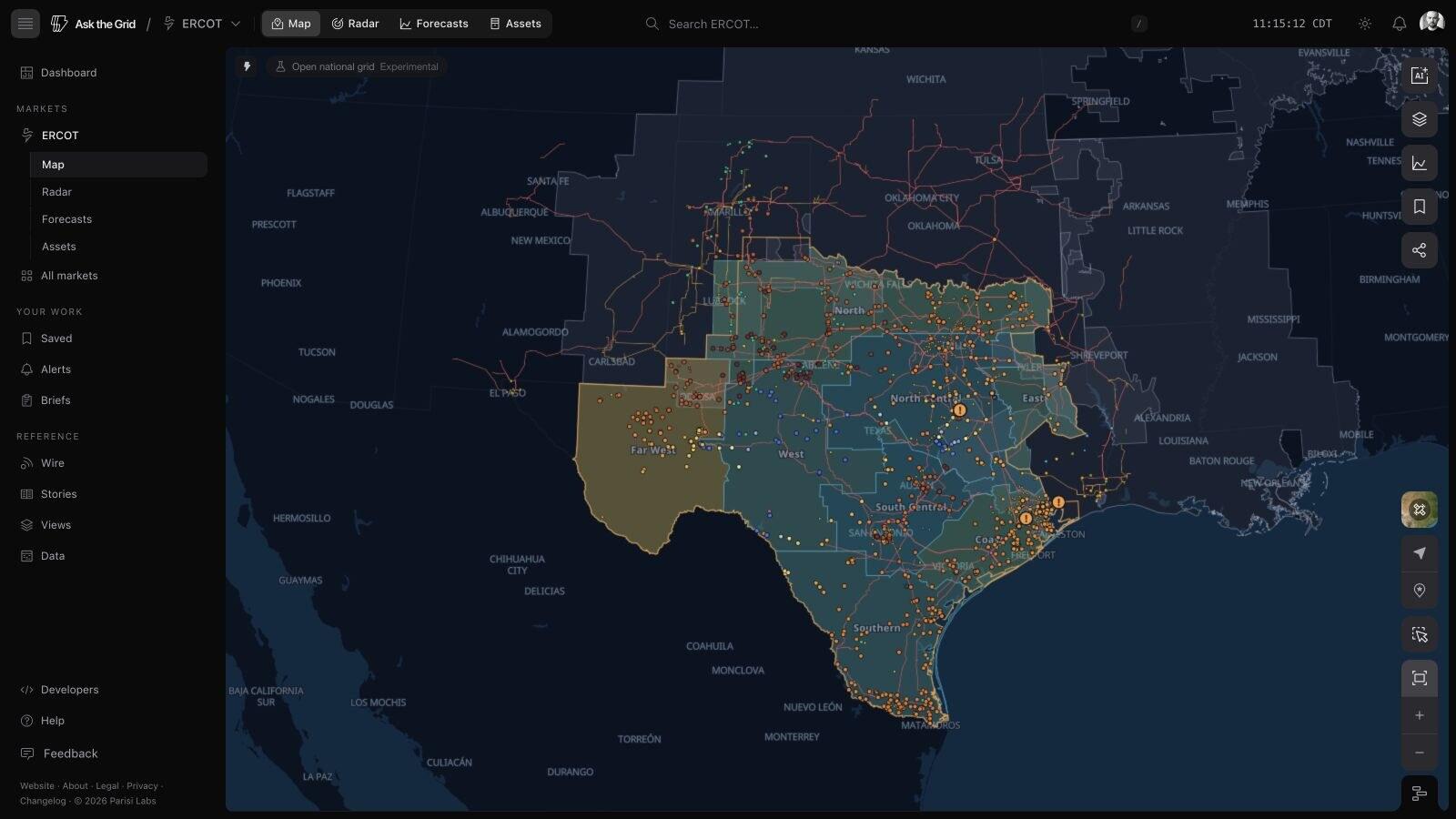
Enterprise access is free for working reporters.
Request newsroom accessAsk with sources attached
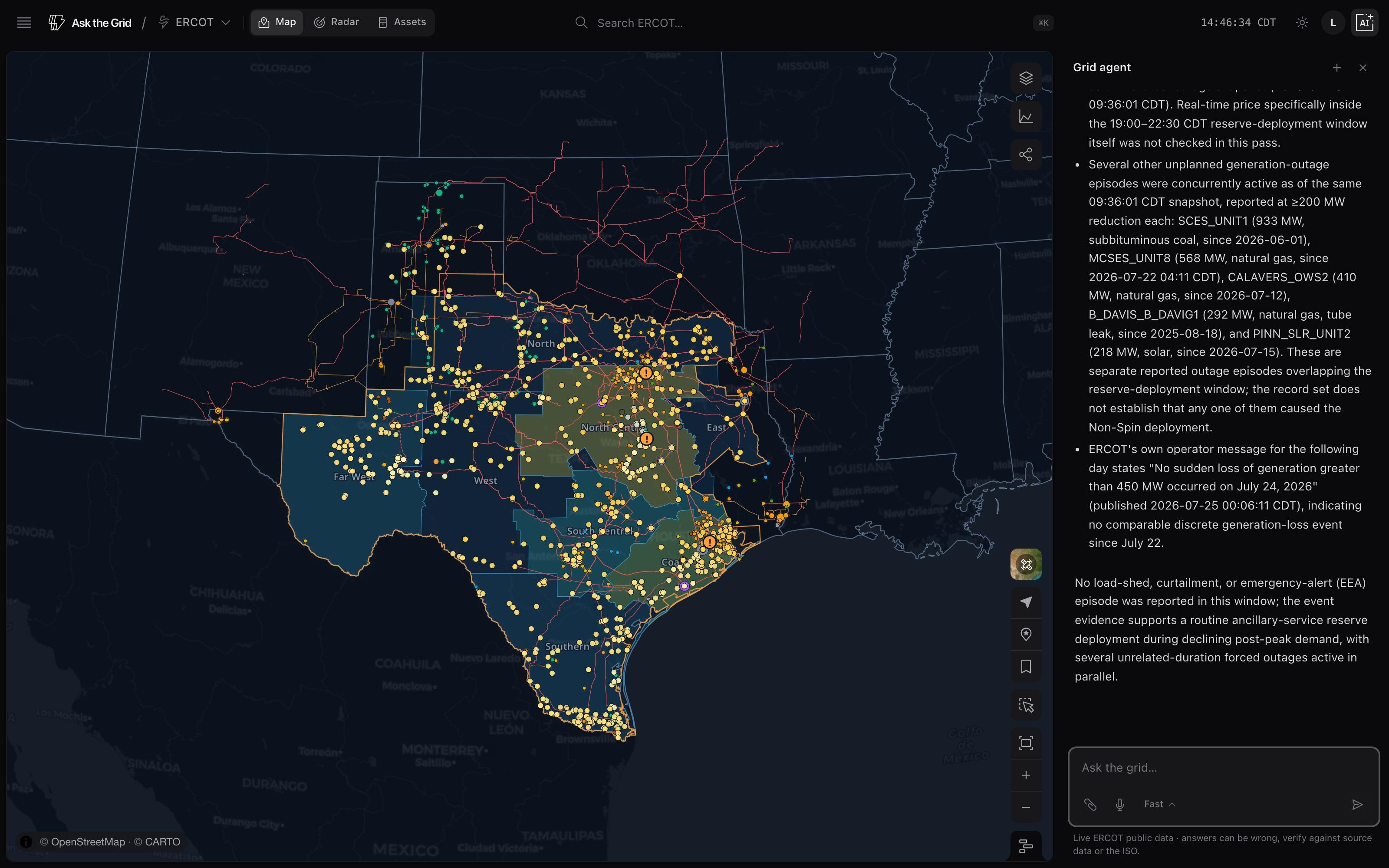
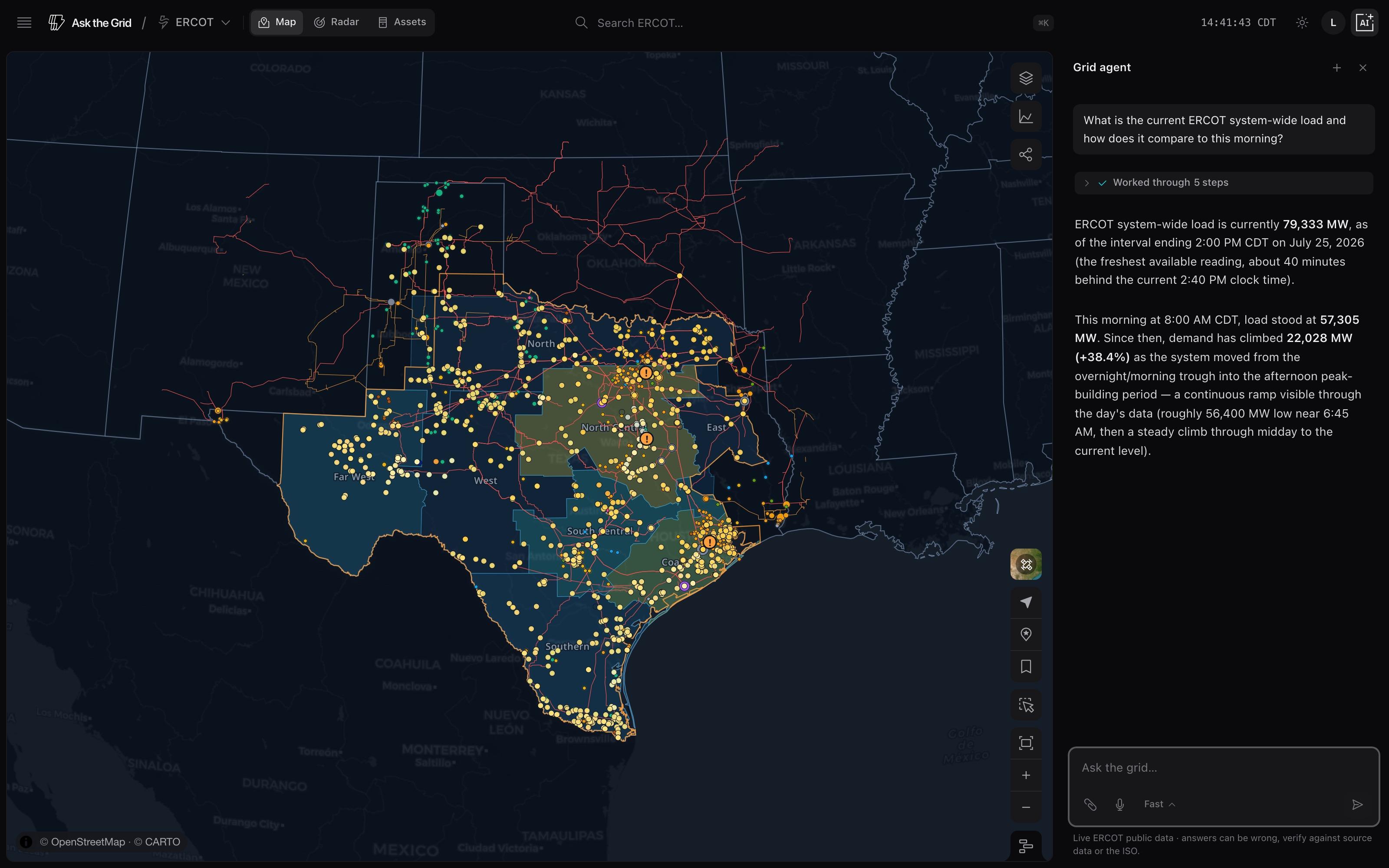
Question market data, operator notices, and the web in one thread, source trail attached.
Export, link, embed
Leave with a cited PNG, a linked view, or a live interactive map inside the story.
Watch for the next one
Radar, grid events, and alerts tell you when a grid condition becomes a story.
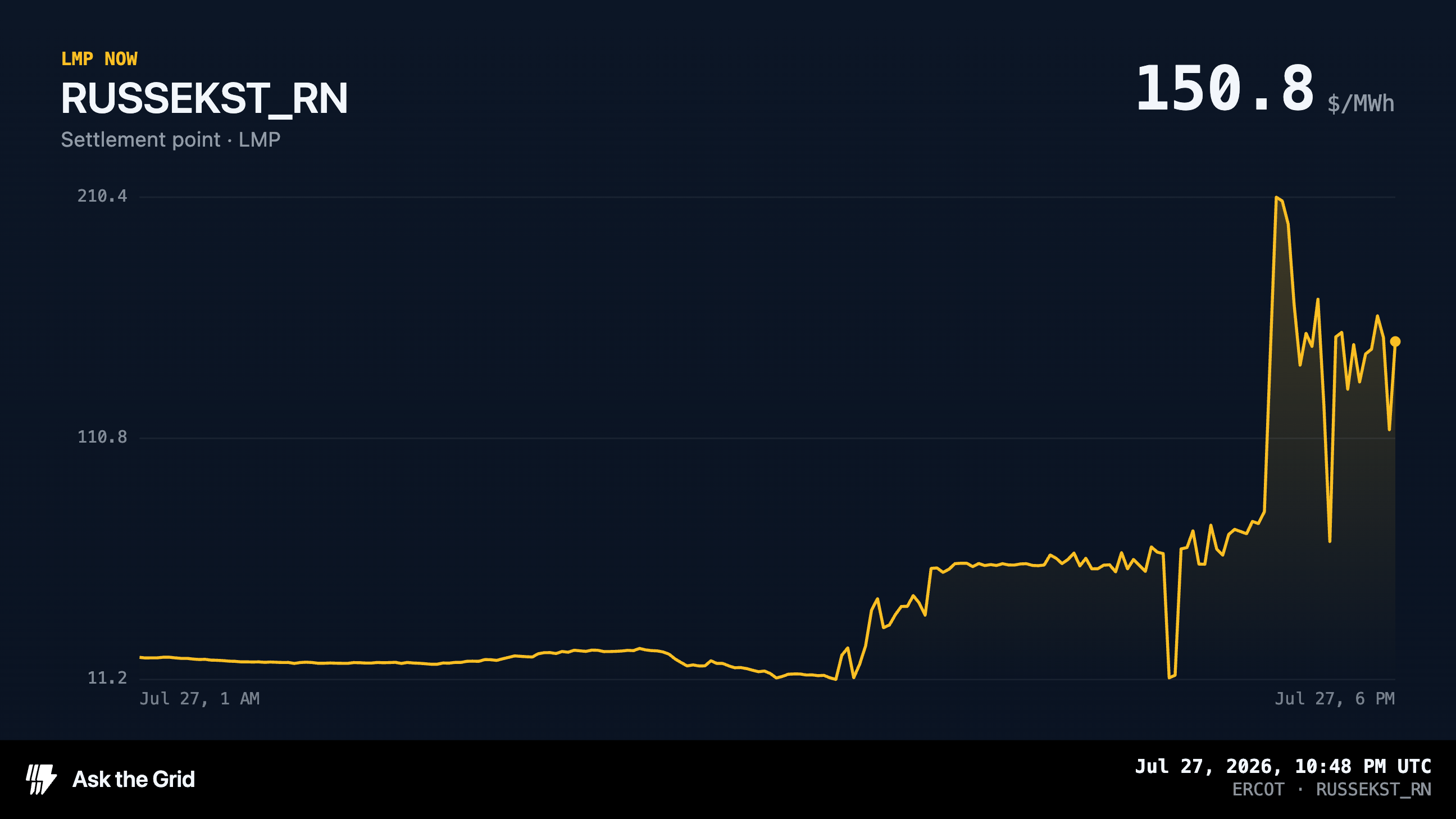
A finished graphic, not a screenshot.
Export the selected chart as a publication-ready PNG with its market, asset, timestamp, and Ask the Grid attribution already attached.
Use the Agent, Radar, reports, events, and alerts to follow the largest US power markets in real time—then carry the evidence to your audience as a cited chart, map, link, or interactive embed.
A reporting desk for the grid.
Research the grid as it is, was, or is expected to be.
Work across market data, operator notices, forecasts, assets, and the web—with the source trail attached. If the next story has not happened yet, Radar, events, and alerts can watch for it.
Ask the question behind the story.
Market data, operator publications, and web research arrive with the source trail attached.
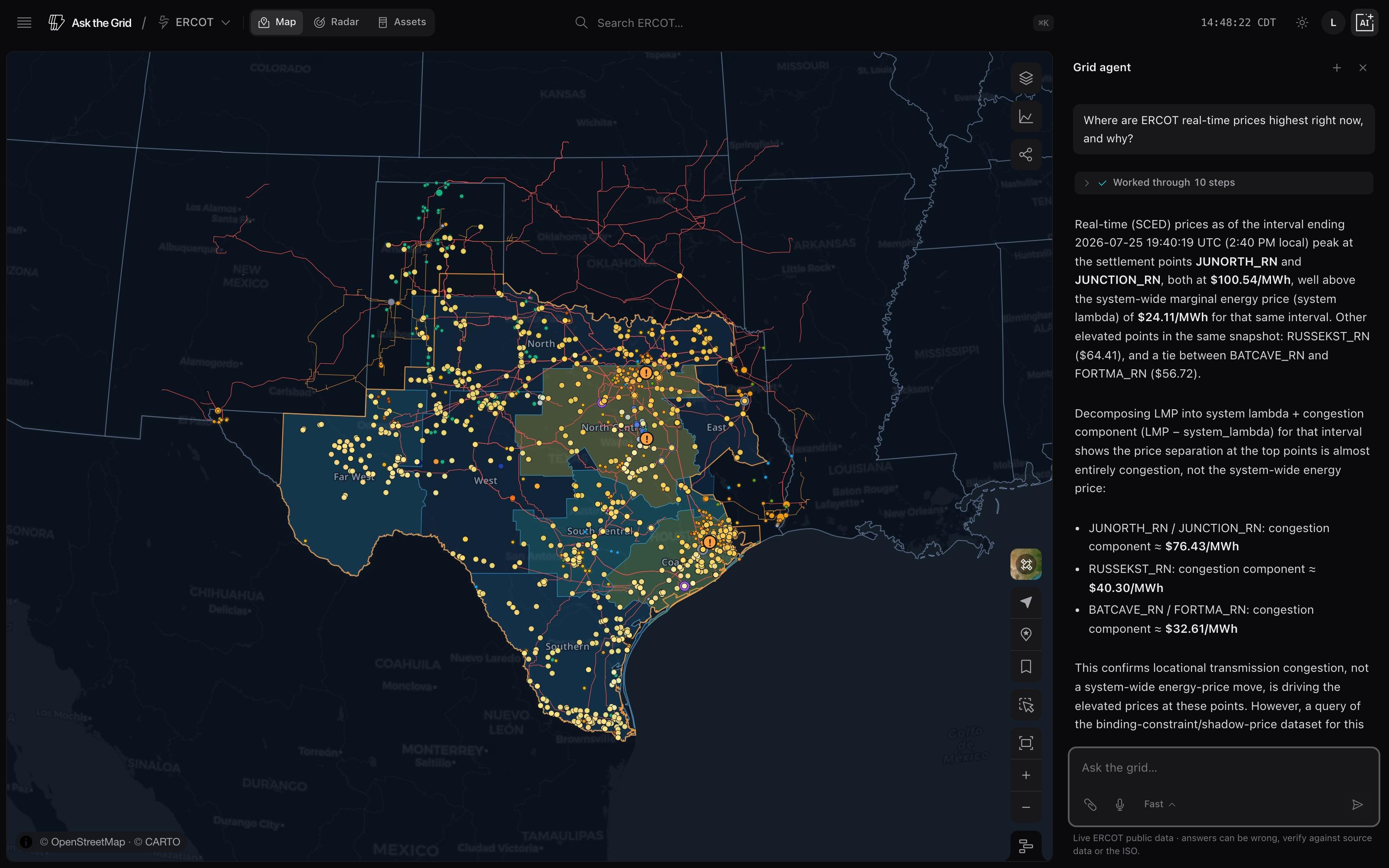
Publish what you find.
Every useful view can leave the platform as an image, a link, or an interactive scene.
Cited links
Send the exact view with its market, timestamp, and sources intact.
Map exports
Frame the place, time, layers, and selected asset in one image.
Live embeds
Carry the same timestamped view into the published story.
Embed this view — one script tag
<script
  async
  src="https://askthegrid.com/embed.js"
  data-atg-url="https://askthegrid.com/map/ercot?s=TG_oyswAEhk"
  data-atg-height="520"
  data-atg-footer="true"
  data-atg-info-box="true"
></script>
Let the reader inspect it.
Freeze the time. Frame the place. Keep the layers interactive.
Working on a grid story?
We’ll give you enterprise access and help build the view.