Southwest Power Pool’s western expansion and how Markets+ fits in
How Southwest Power Pool grew from a 1941 utility pool into an RTO spanning two grids, and how its April 2026 western expansion differs from Markets+.
November 18, 20269 min read


Southwest Power Pool (SPP) is a regional transmission organization that operates the high-voltage grid and runs wholesale electricity markets for its members. On April 1, 2026, it became the first U.S. RTO to operate in both the Eastern and Western Interconnections. SPP is also building Markets+, a separate service for western utilities that want to trade power while retaining local grid control.
The organization began with eleven utilities trying to serve a single Arkansas aluminum plant. Each stage added a different kind of cooperation. The utilities first shared spare generation, then opened their lines to a wider group of customers, and eventually gave a regional operator authority to schedule power for a whole market. That history helps explain why joining SPP as a transmission organization is a bigger commitment than participating in one of its markets.
01
It started with an aluminum plant
In 1941, a new aluminum plant at Jones Mill, Arkansas, needed about 120 megawatts to run at full production. The state had about 100 megawatts of generating capacity. With aluminum urgently needed to build wartime aircraft and little time to build power plants, eleven utilities agreed to share generation and transmission to keep the plant running. They kept the arrangement after the war.
Making aluminum takes a steady supply of electricity to separate the metal from its ore. An interruption could shut down a production line the country was counting on. The utilities could use interconnected lines to bring the plant power from elsewhere when Arkansas generation fell short.
A power pool also gave the utilities a way to help each other when equipment failed or demand ran high. Each could draw from a larger set of plants than it owned, provided the network could carry the transfer. SPP’s anniversary history describes why the utilities kept the arrangement after 1945. They were already learning to operate their systems together.
02
The power pool took on regional reliability
Utilities could share power only if they could keep their interconnected systems stable. In 1968, SPP became one of the founding regional councils of the organization now called the North American Electric Reliability Corporation (NERC). SPP began coordinating regional reserve sharing in 1991 and was incorporated as a nonprofit in 1994.
Reserve sharing addresses a specific problem. When a generating unit fails, operators have to replace its output quickly enough to keep electricity supply and demand in balance. A group of balancing authorities can arrange in advance to draw on one another’s reserves. That lets them respond to a contingency with equipment across the region, subject to transmission limits.
In 1997, SPP became a NERC-certified reliability coordinator. Its operators could now identify problems that crossed utility boundaries. In 1998, SPP introduced regional transmission service. A customer crossing several utility systems could make one request under a regional tariff instead of arranging each leg separately and paying each utility’s transmission charge. Coordination started to change how companies could buy power, as well as how they responded to emergencies.
03
SPP became an RTO and opened an imbalance market
Federal regulators had been encouraging utilities to turn over more control of the high-voltage network to independent regional operators. FERC set the criteria in Order 2000. It conditionally approved SPP in February 2004, directing it to implement an independent board and expand the regional transmission tariff. FERC formally designated SPP as an RTO on October 4, 2004.
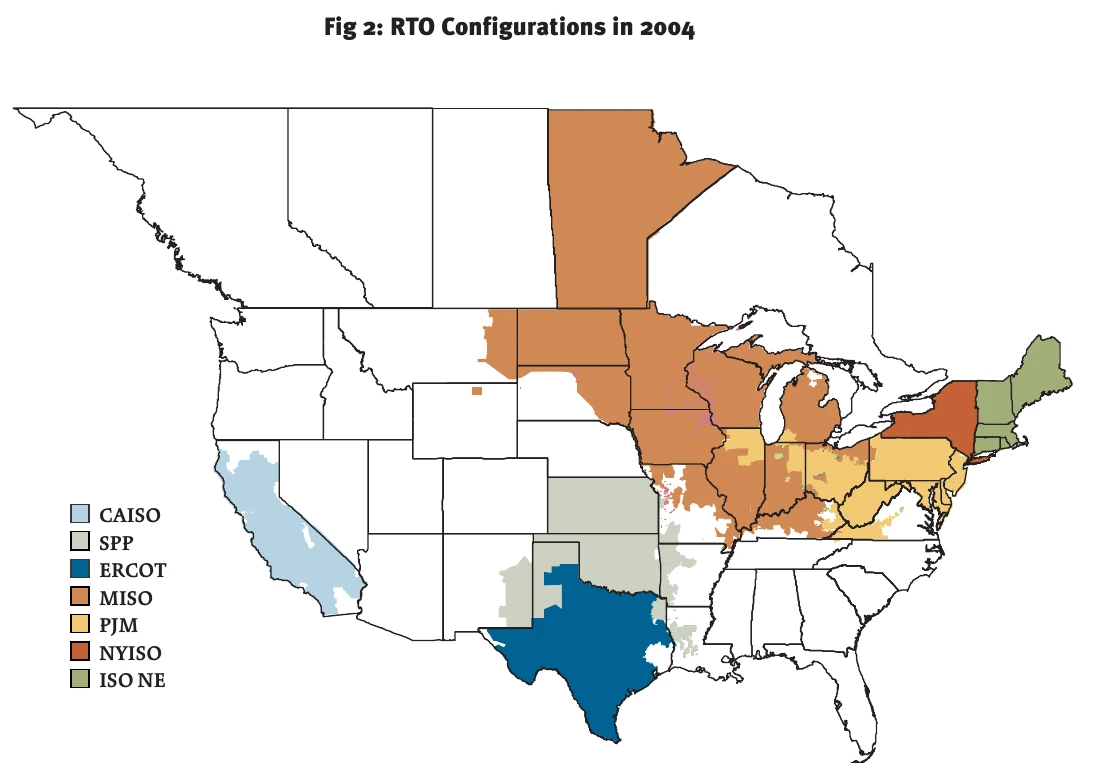
Participating transmission owners still owned their facilities. SPP could administer access to those lines, coordinate how they operated and plan regional upgrades. The independent board gave the market a decision-maker distinct from the companies that bought and sold electricity. State regulators also gained a formal role through SPP’s Regional State Committee.
The next step was trading. On February 1, 2007, SPP opened an Energy Imbalance Service market. Utilities entered real time with schedules arranged in advance. When a generator made less than scheduled or a utility needed more power, SPP could dispatch available resources in the region to cover the difference. The market priced those deviations according to where they occurred and made it easier to use a lower-cost resource across a utility boundary.
04
The Integrated Marketplace moved decisions a day earlier
On March 1, 2014, SPP launched the Integrated Marketplace. The day-ahead auction brings in energy offers, demand bids and transmission limits for the next day. It can schedule supply and operating reserves together. A power plant cleared for reserve can keep some capacity available to respond to an outage instead of committing all of it to energy sales.
Power plants can take hours to start. SPP uses a separate reliability commitment process to call on more plants if the day-ahead schedules leave too little capacity for forecast demand. In real time, SPP updates dispatch as forecasts and outages change. Participants settle departures from their earlier schedules at real-time prices. A utility that bought enough for its forecast can buy the extra power if its demand comes in higher the next day.
The network still determines what trades can clear. If a transmission line into a city fills up, power may have to come from a more expensive generator nearby. This can leave prices different on opposite sides of the constraint. Transmission congestion rights give participants a financial tool to manage the risk of those day-ahead price differences.
SPP also combined the market footprint’s participating balancing areas into a single SPP balancing authority. That put the market and the job of keeping the area’s total supply and demand in balance under the same operator. The change would matter again in 2026, when SPP took on a second balancing area on a separate synchronized grid.
05
The Upper Missouri system joined in 2015
On October 1, 2015, Basin Electric Power Cooperative, Heartland Consumers Power District and the Western Area Power Administration’s Upper Great Plains region brought the Integrated System into SPP. The Integrated System was a transmission network its owners ran jointly. Its origins went back to a 1962 agreement that allowed a cooperative to use the federal network to deliver power from its first plant.
The organizations signed a new agreement in 1998 to provide open-access transmission service after FERC’s Orders 888 and 889. Joining SPP moved eligible transmission facilities under the RTO’s operational control in 2015. The owners kept their assets. Those facilities became the basis of SPP’s Upper Missouri transmission zone, and customers could request open access through SPP’s regional tariff.
That expansion took the RTO much farther north. It also gave SPP direct experience integrating federal transmission into a regional market. Several organizations involved in the 2015 move would later extend their participation to facilities in the Western Interconnection.
SPP kept operating the grid as its compliance role changed. In 2018, FERC approved the end of SPP’s role as a NERC Regional Entity, which monitored and enforced reliability standards. Other regional entities took over that work. SPP continued its separate jobs as an RTO and a reliability coordinator.
06
Western utilities first joined through separate services
SPP began providing reliability coordination in the Western Interconnection in December 2019. An operator could use that service to share a wider picture of system conditions and coordinate responses to a problem. It could take that step while continuing to balance its own area and own or operate its transmission facilities.
On February 1, 2021, SPP opened the Western Energy Imbalance Service, or WEIS. Its central dispatch helped participating utilities cover deviations from scheduled generation and load. A participating utility could buy or sell the difference at short notice through WEIS. It could keep arranging its day-ahead supply through its existing contracts and schedules.
WEIS offered a relatively limited first step into organized trading. SPP started discussing full RTO service with Western utilities as a separate path. When the Western RTO expansion went live on April 1, 2026, SPP discontinued WEIS.
07
What changed when SPP went west
The April 2026 expansion brought SPP’s operating territory to parts of 17 states. It added resources and customers in parts of Arizona, Colorado, Montana, Nebraska, New Mexico, Utah and Wyoming. Colorado Springs Utilities, Deseret Power and Platte River Power Authority joined, alongside expanded participation by existing members such as Basin Electric and Tri-State. Three regions of the federal Western Area Power Administration (WAPA) joined or expanded their participation. SPP’s launch map shows how the additions extend beyond its earlier Central Plains territory.
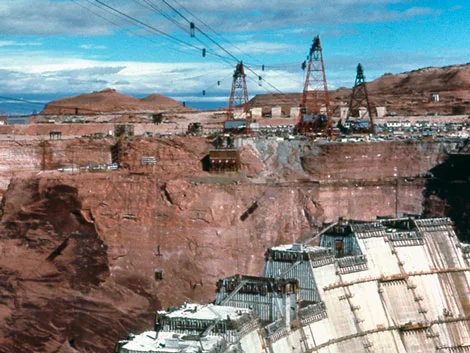
The federal hydropower system shows why these boundaries can be complicated. WAPA markets power from Glen Canyon Dam in northern Arizona. Its Colorado River Storage Project joined the RTO, and WAPA kept a portion of the transmission system outside the RTO to deliver specified shares of Glen Canyon power to certain southern customers.
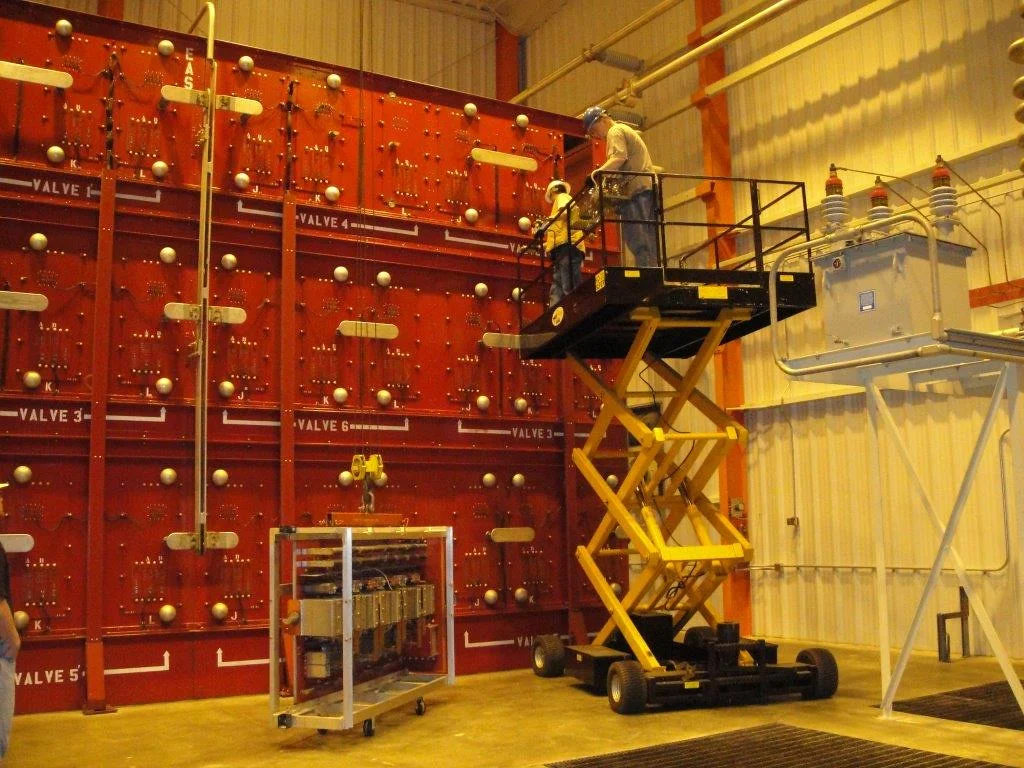
The Eastern and Western Interconnections still run as separate synchronized grids. SPP balances supply and demand in an area on each side. Converter stations let the areas exchange electricity while the two grids run independently. In October 2026 SPP’s market monitor reported two operating direct-current links, at Miles City and Stegall, with a third at Sidney out of service. SPP can schedule transfers while the working links have spare capacity. Prices on opposite sides can diverge when the links fill.
The effect of an interconnection seam can show up over a short distance. In our analysis of two Montana pricing points, hourly prices moved together only weakly even though the points were about 120 miles apart. The two points sit on opposite sides of the seam. The price difference across a seam can still change over the course of a day.
Sources
- SPP’s announcement of the 17-state footprint after the expansion
- SPP’s western expansion dates, participants, and territory map
- Western Area Power Administration’s account of joining the SPP RTO
- FERC’s order on how the expanded RTO uses direct-current ties
- SPP market monitor’s October 2026 report, including available tie capacity
- Miles City photograph license · CC BY 2.0
08
What is SPP Markets+?
Markets+ will coordinate which power plants run and how much they generate, using the bids and offers of participating western utilities. It will schedule supply in a day-ahead market and adjust those schedules in real time. Participants can use the same trading platform and keep their existing arrangements for operating and planning the grid.
With full RTO membership, SPP takes on operational oversight of participating transmission facilities, coordinates reliability and plans the regional network with its members. Members trade in the Integrated Marketplace. Markets+ is optimized separately and has its own participation agreement. An entity can take part in both services under separate agreements.
FERC accepted the Markets+ tariff in January 2025, then approved a mechanism to fund implementation. SPP lists Arizona Public Service and Puget Sound Energy among the utilities supporting that work. As of November 18, 2026, SPP was preparing for an October 2027 Markets+ launch. Its western RTO expansion was already operating.
These options answer different questions for utilities weighing regional coordination. Participating in Markets+ would give a utility a larger day-ahead and real-time market for its power. Joining the RTO combines access to the Integrated Marketplace with shared transmission operations, reliability coordination and planning. The choice changes which decisions the utility makes itself and which it makes through the regional operator.