What Is MISO Energy? How the Midwest Built a Power Market
How the Midcontinent Independent System Operator became the first FERC-approved RTO, opened its wholesale markets, expanded south, and began planning a regional transmission backbone.
November 18, 20269 min read


In 1913, a hydroelectric plant at Keokuk, Iowa, began sending power to St. Louis. A transmission line could reach across state borders. The companies behind that line still arranged their own sales and decided how to run their own systems. It took most of the century for the Midwest to put those decisions under one regional operator.
MISO Energy is the Midcontinent Independent System Operator, the nonprofit that coordinates the high-voltage grid and runs wholesale electricity markets across parts of 15 U.S. states. It also coordinates reliability with Manitoba Hydro. Local utilities still run the distribution wires and serve retail customers. MISO’s job is to get the larger system to work together, from scheduling tomorrow’s generators to planning lines that might take a decade to build.
01
The Midwest grid before MISO
The Eastern Interconnection grew from links among utility systems. Utilities could buy from neighbors, share reserves and make emergency exchanges, while they continued to serve distinct territories and make many operating decisions locally. Across the middle of the country, several reliability regions helped coordinate those utilities. A reliability region could set operating expectations across many companies without operating a common wholesale market.
An EIA map published in 1998 captures the transition. It shows the Mid-Continent Area Power Pool as one area under discussion and a proposed Midwest ISO farther east. Utilities were trying to decide which lines and owners would be administered together. The region had a connected grid, several proposals for coordinating it, and no common set of market prices.
The seller of electricity also needed a way to deliver it. In the old arrangement, a utility that owned the lines could be both a seller and the company a rival had to ask for access. Regional coordination had to solve that institutional problem along with the physical problem of keeping the grid in balance.
02
Why MISO has ISO in its name and operates as an RTO
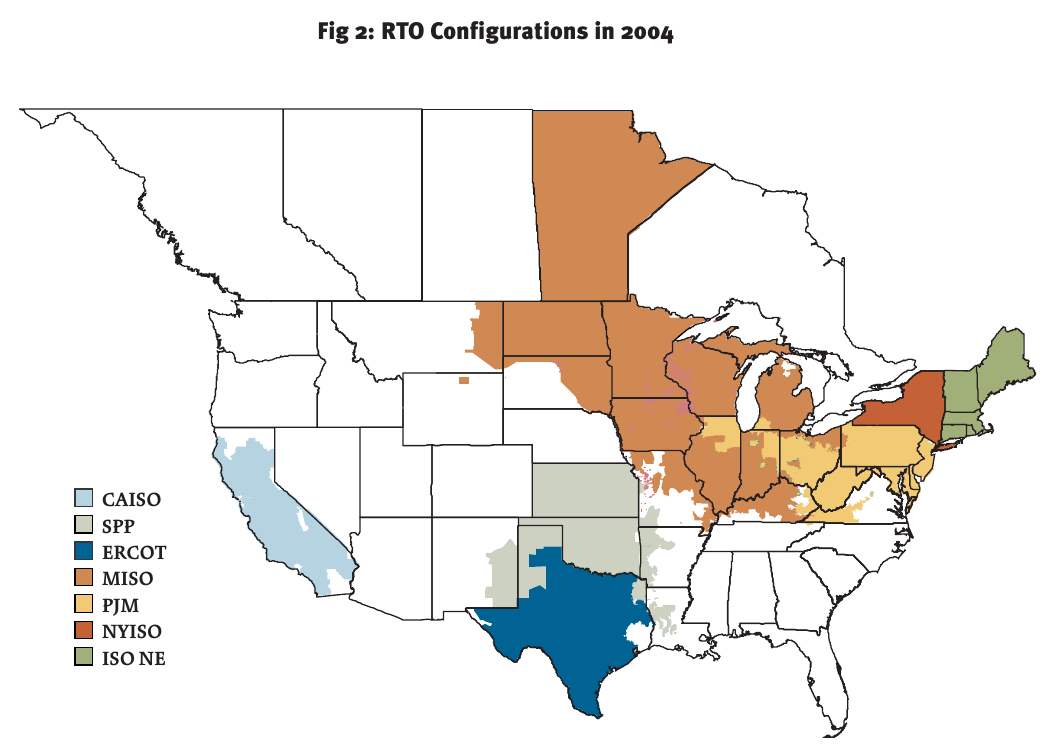
In 1996, FERC’s Orders 888 and 889 set rules for nondiscriminatory transmission access and access to transmission information. In March 1998, transmission owners incorporated the Midwest Independent Transmission System Operator. Instead of building another company’s lines, they formed an independent organization to administer access to the ones they already owned.
FERC’s December 1999 Order 2000 went further. It set standards for regional transmission organizations, giving them a wider remit that included regional planning and authority over transmission operations. On December 15, 2001, Midwest ISO took over reliability coordination for participating systems. FERC approved it that December as the country’s first permanent RTO. The name still identified the independent system operator that the utilities had originally created.
On February 1, 2002, Midwest ISO began offering regional transmission service under one tariff. A customer could arrange transmission across participating systems on common terms. The change moved decisions about access to the regional operator. The utilities kept the facilities and the responsibility for maintaining them. A shared energy auction would take three more years to build. See how ISOs and RTOs differ.
03
The wholesale electricity market opens in 2005
MISO had planned to launch in March 2004. After the August 2003 Northeast blackout, the start date slipped as MISO reviewed the schedule, accounted for older transmission agreements and tested its systems. In 2004, it put in a better tool for estimating live conditions on the grid from available measurements. It also rehearsed directing generators across different utilities. FERC’s 2004 market report describes the preparations.
On April 1, 2005, MISO opened its day-ahead and real-time energy markets. Utilities and independent generators could offer supply into a common auction. Buyers could schedule power through that auction or bring in transactions negotiated privately. MISO could then assess those schedules together against the region’s transmission limits and choose which generators had to run.
The day-ahead market creates a schedule and prices for each hour of the following day. The real-time market accounts for what actually happens. Demand can be higher than forecast, a plant can trip, or a line can go out of service. The two settlements value the scheduled quantity at the day-ahead price and settle the difference against the real-time price.
The prices are local. Given an extra megawatt of demand at a specific point, the market estimates the cost of serving it within the limits of the network. If a line into a city is already full, the cheapest plant on the other side cannot necessarily deliver another megawatt there. The market may have to call on a costlier plant closer to the city.
A 2006 filing by Wisconsin Public Power put numbers on that problem. In the first seven months of the market, the utility estimated an average of $63.92/MWh in eastern Wisconsin versus $52.15/MWh for the rest of MISO. It pointed to limits on transmission into the area. MISO also launched a market for financial transmission rights in 2005, giving participants a way to hedge day-ahead congestion costs between two locations.
04
Twenty-four balancing areas become one
Before 2009, the energy market spanned 24 separate balancing areas. Each balancing authority was responsible for keeping the electricity produced, consumed and exchanged in its area in balance. The same market could schedule plants across all of them, while many of the real-time balancing responsibilities remained local.
On January 6, 2009, MISO became a NERC-certified balancing authority and opened an ancillary services market. Operators could coordinate energy, frequency regulation and contingency reserves together. A generator that could produce another 100 MW could instead be held below its maximum so it had room to respond if a different plant tripped. A regional market could choose where to hold that reserve, subject to whether the grid could deliver it when needed.
Coordination with neighboring grids still mattered. PJM and MISO had put a joint operating agreement in place at the end of 2003, when PJM already had an energy market. Once MISO opened its market, the two operators could use bids to decide who should adjust generation to relieve congestion on a shared constraint. A generator on one side of the border can affect loading on a line managed by the other. The agreement gave operators a way to act on that physical connection.
05
The expansion to MISO South in 2013
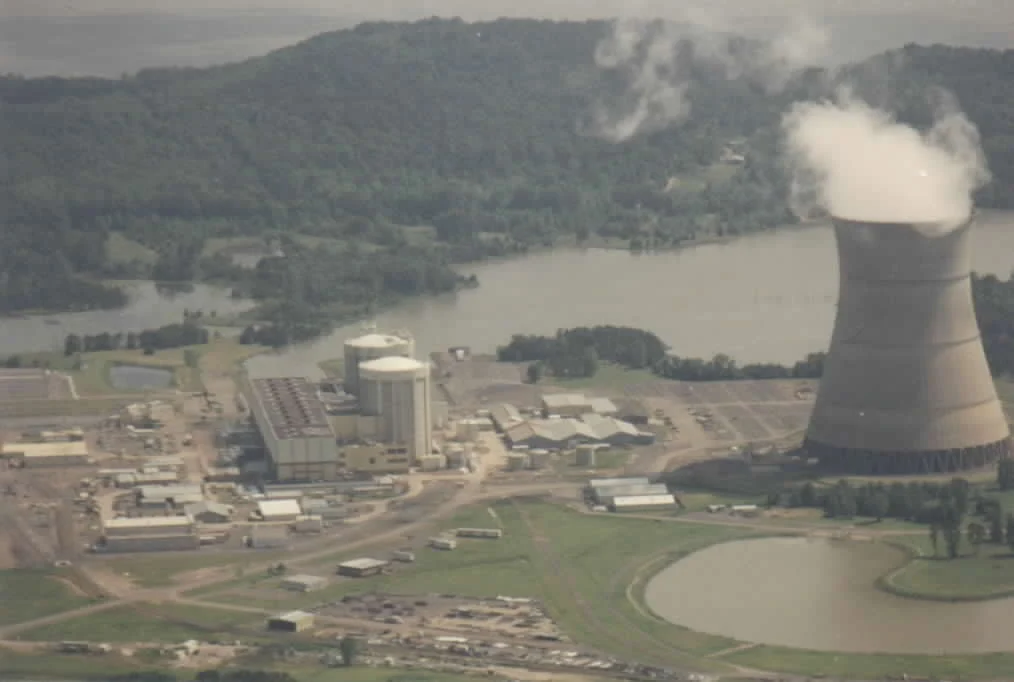
In December 2013, Entergy’s utilities and other operators in parts of Arkansas, Louisiana, Mississippi and Texas joined MISO. An EIA report from before the integration noted how different the generating fleets were. Much of the original region’s capacity was coal-fired. Natural gas led in the incoming systems, which also had substantial nuclear capacity. The combined market could draw on both fleets. Ahead of the integration, the operator changed its name to Midcontinent Independent System Operator in April 2013.
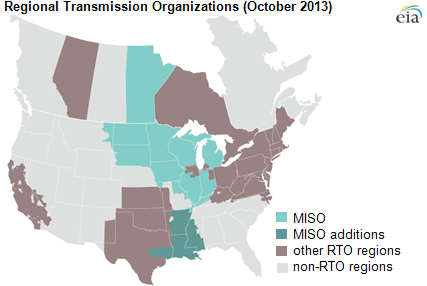
The transmission between the two regions was limited. The original north–south connection gave MISO a path through its own system. Higher transfers also depended on arrangements with neighboring systems, where some of the electricity would flow. MISO could schedule generators in both regions through a single market and still find that power on one side was expensive to deliver to the other.

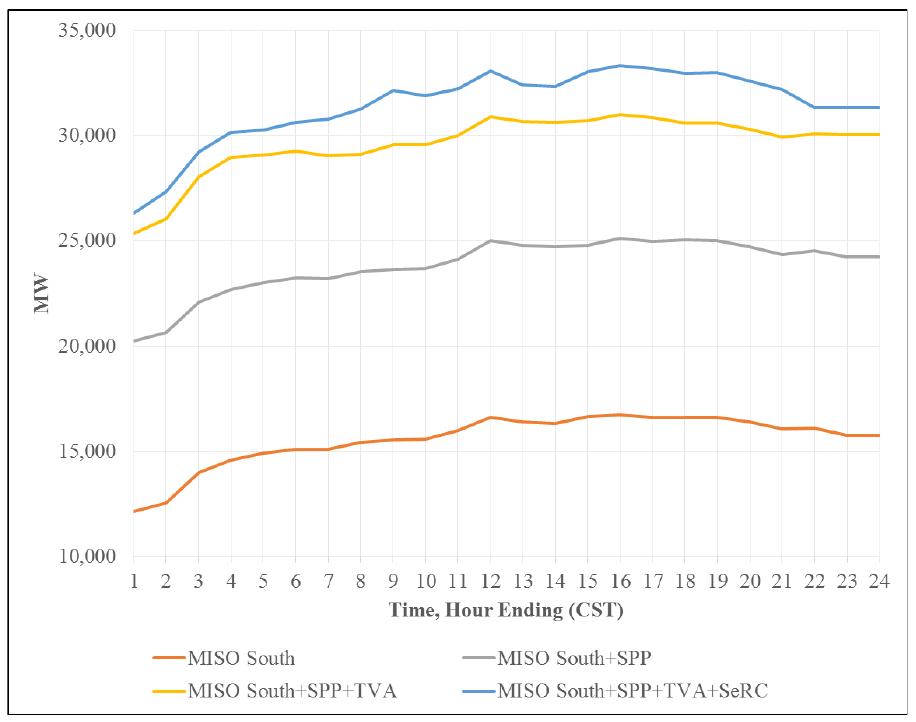
During the January 2018 cold snap, power plants in MISO South suffered outages and deratings while demand rose. The joint FERC and NERC investigation recorded a north-to-south transfer of 4,331 MW around 6:30 a.m. Central on January 17, above the usual 3,000 MW contractual limit during the event. That extra transfer helped the South draw on generation farther north. Coordination with the operators carrying some of that flow mattered as much as the pool of available generation.
06
How MISO’s capacity market became seasonal
The energy market schedules the megawatt-hours people use. MISO’s capacity rules ask which resources are expected to be available when the system is under stress. Load-serving utilities can cover their share of that requirement with owned or contracted resources. They can also use MISO’s Planning Resource Auction to fill a shortfall. A zone’s required local resources and ability to import influence the results.
In the auction for 2022–23, several northern and central zones cleared at $236.66 per megawatt-day while the southern zones cleared at $2.88. FERC’s report records how a capacity shortfall affected the higher-priced zones. A utility can face different costs for securing dependable resources even when all of those generators bid into the same energy market.
For 2023–24, MISO moved to separate requirements and accreditation for each of the four seasons. A plant’s contribution can differ between summer heat and winter cold. MISO later adopted a sloped demand curve that raises the value of additional capacity as reserves approach the reliability requirement. In the 2026–27 auction, MISO reported enough capacity for every season and the tightest supply-demand balance in summer.
07
From sharing existing lines to building a regional grid
The first MISO tariff made it easier to use existing lines together. The next question was which new lines the region should build and who should pay for them. A project can cost money in one utility territory and reduce congestion or improve reliability in several others. Trying to recover the whole cost from customers along the route can miss a large part of the benefit.
In 2011, MISO approved 17 Multi-Value Projects, a regional portfolio eligible for shared costs. The projects addressed overlapping needs, including reliability, economics and public-policy requirements. By 2022, all but one of the original projects was complete. A later round, approved in 2022 as the first tranche of Long Range Transmission Planning, included 18 projects.
In December 2024, MISO’s board approved 24 Midwest transmission projects estimated to cost $21.8 billion. The portfolio included a higher-voltage backbone built around 765-kV lines. MISO evaluates the projects together across several possible futures for generation and demand. Transmission developers still have to site, permit and build the lines. MISO’s role is to identify a network that works across utility boundaries before individual projects are built.
08
Where the MISO power grid reaches today
The modern footprint includes all or parts of 15 states across Arkansas, Illinois, Indiana, Iowa, Kentucky, Louisiana, Michigan, Minnesota, Mississippi, Missouri, Montana, North Dakota, South Dakota, Texas and Wisconsin. The footprint follows participating utilities, so one state can contain two markets. The Chicago area is in PJM, while parts of central and southern Illinois are in MISO. Manitoba Hydro operates its own grid, and MISO provides reliability coordination under a separate agreement.
That geography still shows up in prices. In our November 2026 analysis of eight MISO hubs, two hubs could spend very different amounts of time above the same price threshold. The live MISO price map shows where price differences are occurring now. The transmission map shows the lines connecting those places and helps explain why power can be plentiful at one point and expensive to deliver to another.