What Is NYISO? How New York Built Its Electricity Market
The history of the New York Independent System Operator, from the 1965 blackout to today’s statewide wholesale market and eleven price zones.
November 18, 20269 min read


The New York Independent System Operator (NYISO) runs New York’s high-voltage grid and its wholesale electricity markets. It directs which resources supply power, coordinates imports and exports, and plans for future reliability. Utilities own the wires and deliver electricity to homes and businesses.
NYISO serves a single state with eleven load zones. A megawatt-hour can cost more in Manhattan than in western New York because getting power to the city depends on the lines, imports, and local plants available at that moment. The history goes back to a time when the utilities shared the same wires but ran their own systems.
01
The 1965 blackout brought utilities together
Before the state had a grid operator, each utility planned and ran a system of plants and wires for its own customers. Connections between utilities let them trade power and help one another after an outage. Those same connections could also carry a disturbance far beyond the first equipment failure.
On November 9, 1965, a protection relay tripped a line carrying power from the Sir Adam Beck No. 2 generating station near Niagara Falls, Ontario. The other lines carrying power toward Toronto overloaded and tripped. Power shifted onto other routes, and the failure spread into New York and across much of the Northeast. Roughly 30 million people lost electricity. U.S.–Canada outage task force history.
New York’s utilities responded by forming the New York Power Pool in 1966. The pool coordinated generation and reserves, monitored the links between utility systems, and planned around outages. Each utility still had its own equipment and customers. The pool gave them a common operating view and a way to take action across the state.
02
The 1977 blackout isolated New York City
On July 13, 1977, lightning struck transmission lines in northern Westchester. Other equipment failed or disconnected as the evening progressed. Con Edison lost access to incoming power faster than its system could make up the difference, and its network separated from its neighbors. New York City and part of Westchester went dark. Federal blackout investigation.
In 1965 the outage cascaded across a large part of the Northeast. The 1977 failure centered on Con Edison’s service area while neighboring systems stayed up. The New York Power Pool was already operating by then. Coordinated dispatch helped utilities share power, but the ability to deliver it still depended on which physical ties were in service.
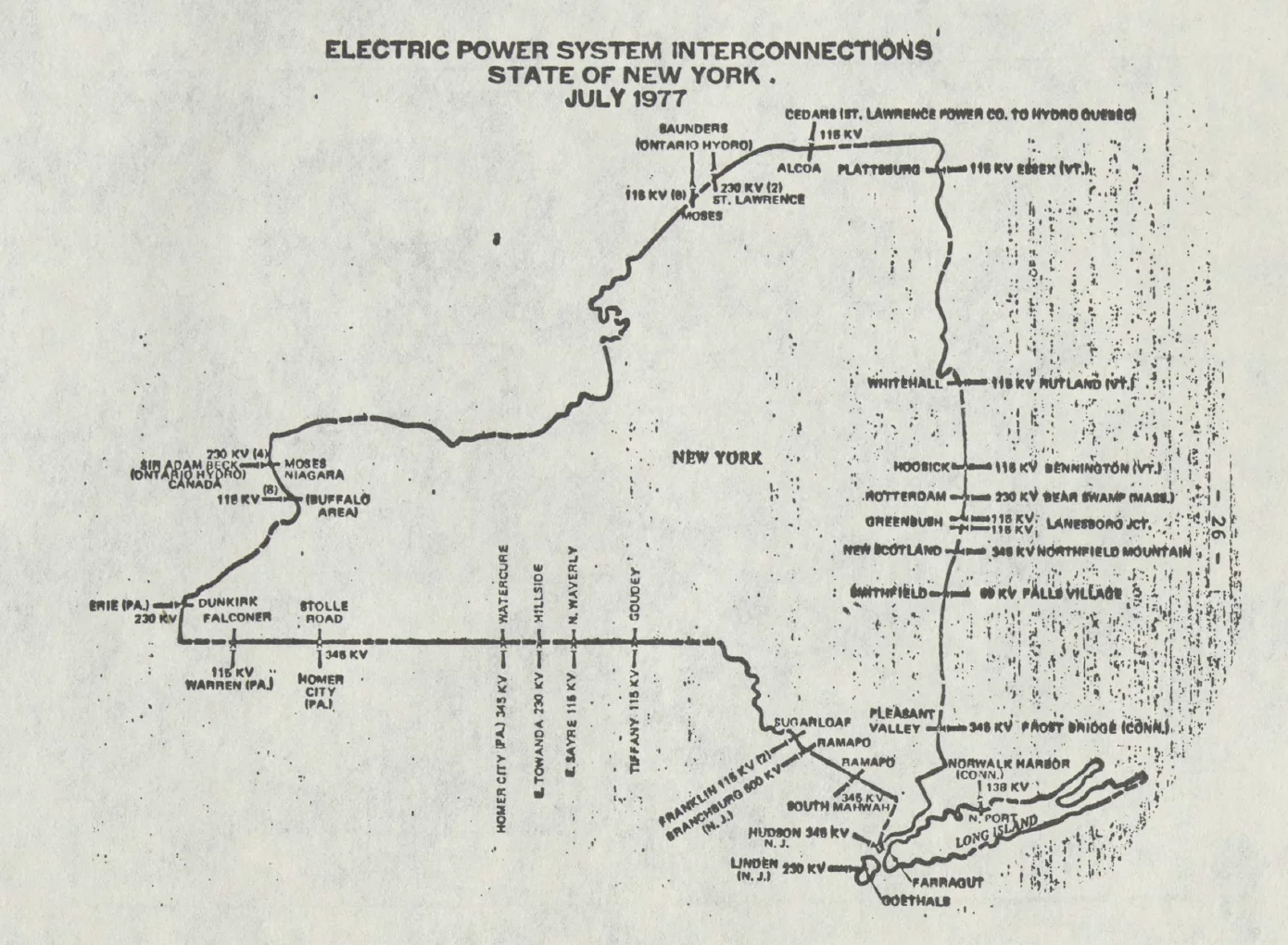
The 1977 map shows those ties. The heavy outline traces the state, and the labeled lines show how New York connected to nearby grids. A modern price-zone map answers a separate question about which locations settle at a common price for demand.
03
The 1996 reforms opened the grid to competition
The Power Pool was built to coordinate utilities that both owned generating plants and delivered electricity. Opening it to independent sellers posed a practical question. Could a competitor use the transmission system on the same terms as the utility that owned the lines? In 1996, FERC Order 888 required open access to interstate transmission under federal jurisdiction. An independent operator was one way to administer that access.
New York changed its retail rules at the same time. In May 1996 the state Public Service Commission issued Opinion 96-12, setting a path toward retail supply competition. Separating supply charges from delivery made it possible for customers to buy energy from competing suppliers while the utility continued to operate the local network. NYISO’s account of the restructuring.
The competitive wholesale markets opened on November 18, 1999. On December 1, the Power Pool formally transferred grid operations to NYISO. The control-room work continued, including keeping supply and demand in balance. The new structure opened wholesale trading to qualified participants under common rules, with an independent operator running the market and the network.
The distinction still matters to a customer. NYISO operates the grid and settles wholesale transactions. A neighborhood outage goes to the local utility for repair. A bill combines retail supply and delivery charges, so an hourly move in wholesale prices can have a much smaller or slower effect at the meter.
04
The 2003 blackout reached New York from Ohio
On August 14, 2003, New York was already operating under NYISO when another outage spread across the region. This one began in Ohio. Lines contacted trees and tripped, and problems with alarms and system monitoring kept operators from seeing the full extent of the problem. Further failures spread across the Great Lakes and into New York and Ontario. About 50 million people lost power. U.S.–Canada task force final report.
The three blackouts tell different stories. The 1965 disturbance started at a relay in Ontario and helped bring New York’s utilities into a power pool. The 1977 outage isolated Con Edison after lightning and subsequent equipment losses. In 2003 a failure outside New York reached the state despite the existence of an independent grid operator.
The task force concluded that reliability rules needed to be mandatory and enforceable. Congress created federal authority for that framework in the Energy Policy Act of 2005. The standards apply across grid operators, transmission owners, and other covered entities. A wholesale market can schedule power inside a region, while reliable operation also depends on coordination beyond its borders. FERC’s reliability explainer.
05
What NYISO controls and how the energy market works
In the day-ahead market, generators offer to sell electricity and buyers submit bids for the next operating day. NYISO clears the market against transmission and operating limits. A cleared position sets a financial commitment for a specified hour. Operators then adjust the actual dispatch as demand, generation, and available lines change.
The real-time market settles differences. If a generator cleared to supply 100 MWh for a given hour and delivered 90 MWh, it would receive the day-ahead price for the 100 MWh position and buy back the 10 MWh shortfall at real-time prices. The timing of a plant failure can therefore affect its revenue even if it had already sold its output the day before.
New York also schedules trades with Ontario, Québec, New England, and PJM. A low offer from outside the state can help supply New York when the interface has room for another delivery. When a line is full, the next available resource may be closer to the customer and more expensive. NYISO publishes its transmission limits and flows for readers who want to see those interfaces in operation.
06
NYISO Zone J and the other ten load zones
NYISO Zone J is New York City, and Zone K is Long Island. The NYISO load zones map shows all eleven zones. From A to K they are West, Genesee, Central, North, Mohawk Valley, Capital, Hudson Valley, Millwood, Dunwoodie, New York City, and Long Island.
NYISO calls the wholesale price at a specific location the locational based marginal price (LBMP). It reflects the cost to serve one more unit of demand there, accounting for energy, congestion, and electrical losses. NYISO weights the prices for load points by their electricity demand to calculate the zonal price charged to load-serving entities. Generators are generally paid at their own locations.
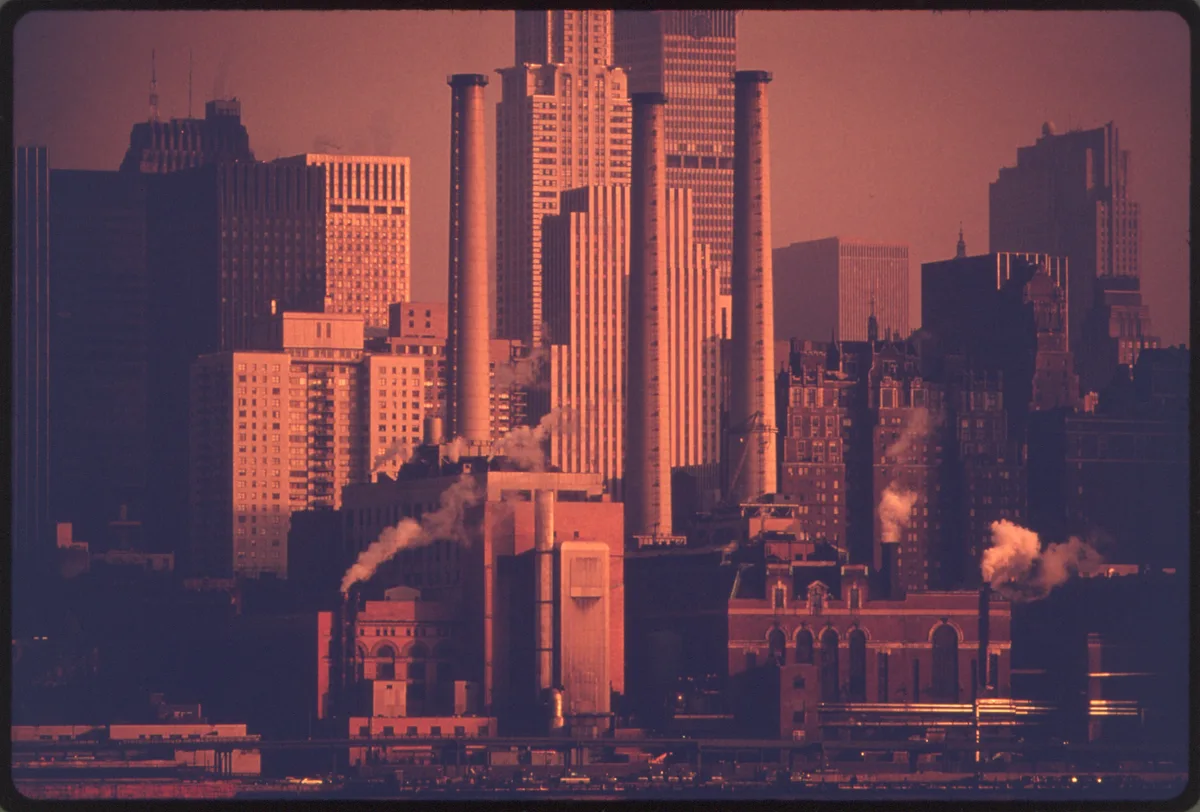
Imagine a hot afternoon when the lines carrying electricity toward New York City are already full. NYISO may have to call on a higher-cost plant closer to the city to serve additional demand there. Western New York can have a lower price in that same interval. If the network has enough room, the difference can be much smaller.

07
How New York buys capacity where it needs it
Energy and capacity pay for different things. Wholesale energy prices are in dollars per megawatt-hour. Capacity obligations are tied to megawatts of qualifying supply that can be available during a future period. Suppliers serving customers have to procure enough qualifying capacity to cover the expected peak with a reliability margin.
A statewide reserve margin alone cannot guarantee that enough power can reach particular communities. NYISO sets separate local capacity requirements for Zone J, Zone K, and the larger G–J locality from the Hudson Valley through New York City. The city is part of G–J and has its own requirement within it. These areas reflect constraints on importing power under stressed conditions.
That is why two states with similar totals for installed generating capacity can face very different reliability issues. Even inside New York, where a resource connects affects which customers it can help serve if equipment is out of service.
08
Retirements, new lines, and storage in the 2020s
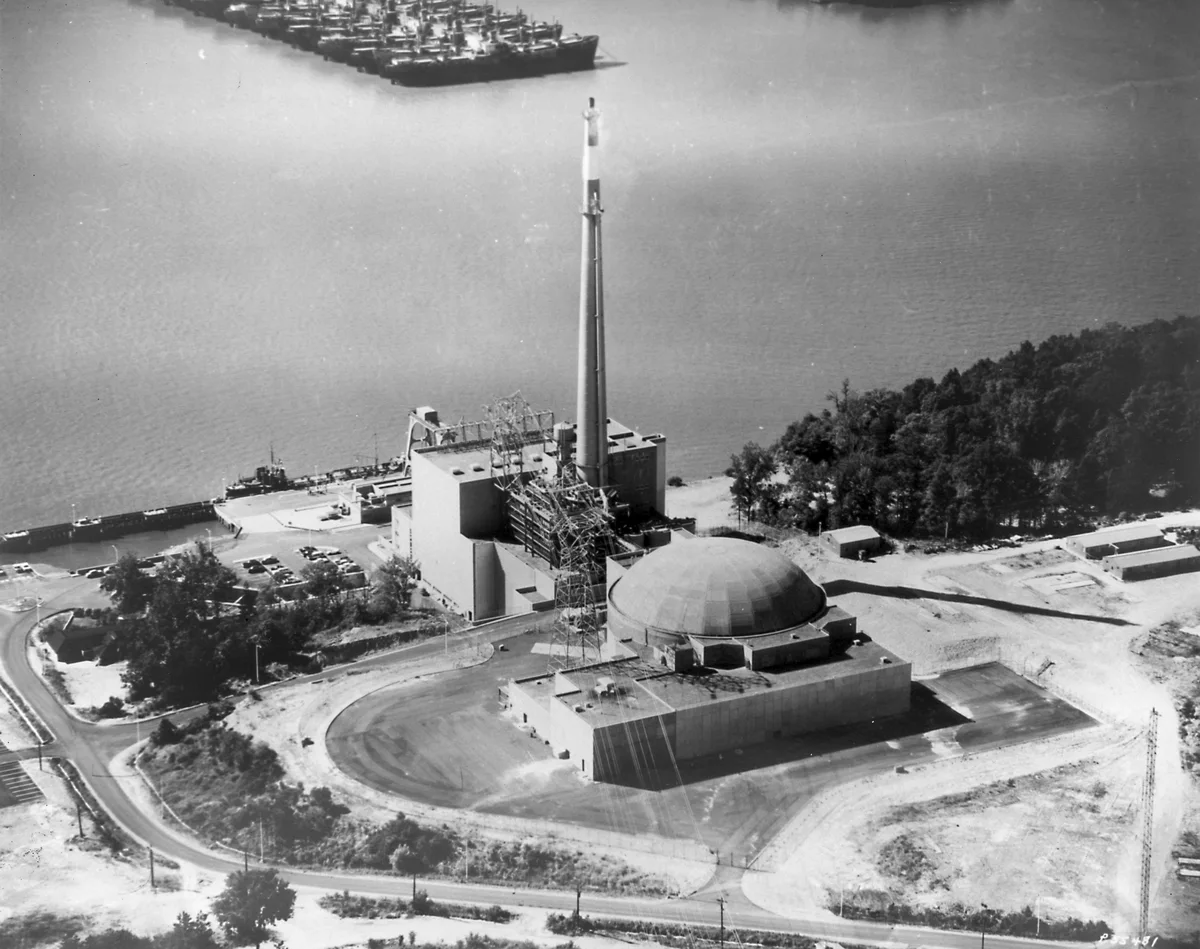
The Indian Point units that had served the lower Hudson Valley and New York City region retired in 2020 and 2021. NYISO’s independent market monitor cited Unit 3’s retirement and outages for transmission work among the reasons congestion increased on several pathways in 2021. Retiring a large local plant changes which lines the grid relies on to serve the same load.
New transmission changed those options again. Central East Energy Connect entered service in December 2023 and expanded a congested corridor between the Utica and Albany areas. The Champlain Hudson Power Express, a 1,250 MW direct-current line from Québec to Queens, reached commercial operation on May 13, 2026. It gives the city a direct route to Canadian hydropower.
Storage adds another option. In September 2026, the state awarded contracts for 950 MW of battery projects across the Bronx, Long Island, the Hudson Valley, and western New York. Their expected delivery is later in the decade. NYSERDA opened a second procurement on November 12, 2026. Projects in both rounds can help meet demand only once they enter service.
On the NYISO market guide, compare Zone J, Zone K, and the West at the same timestamp. Then check demand, generation, and any congestion on the interfaces between them. That is the continuity across the whole history. Prices change as the grid’s ability to move and supply electricity changes.