01
Start at the network
Place the point of interconnection inside the transmission and market geography it will actually join.
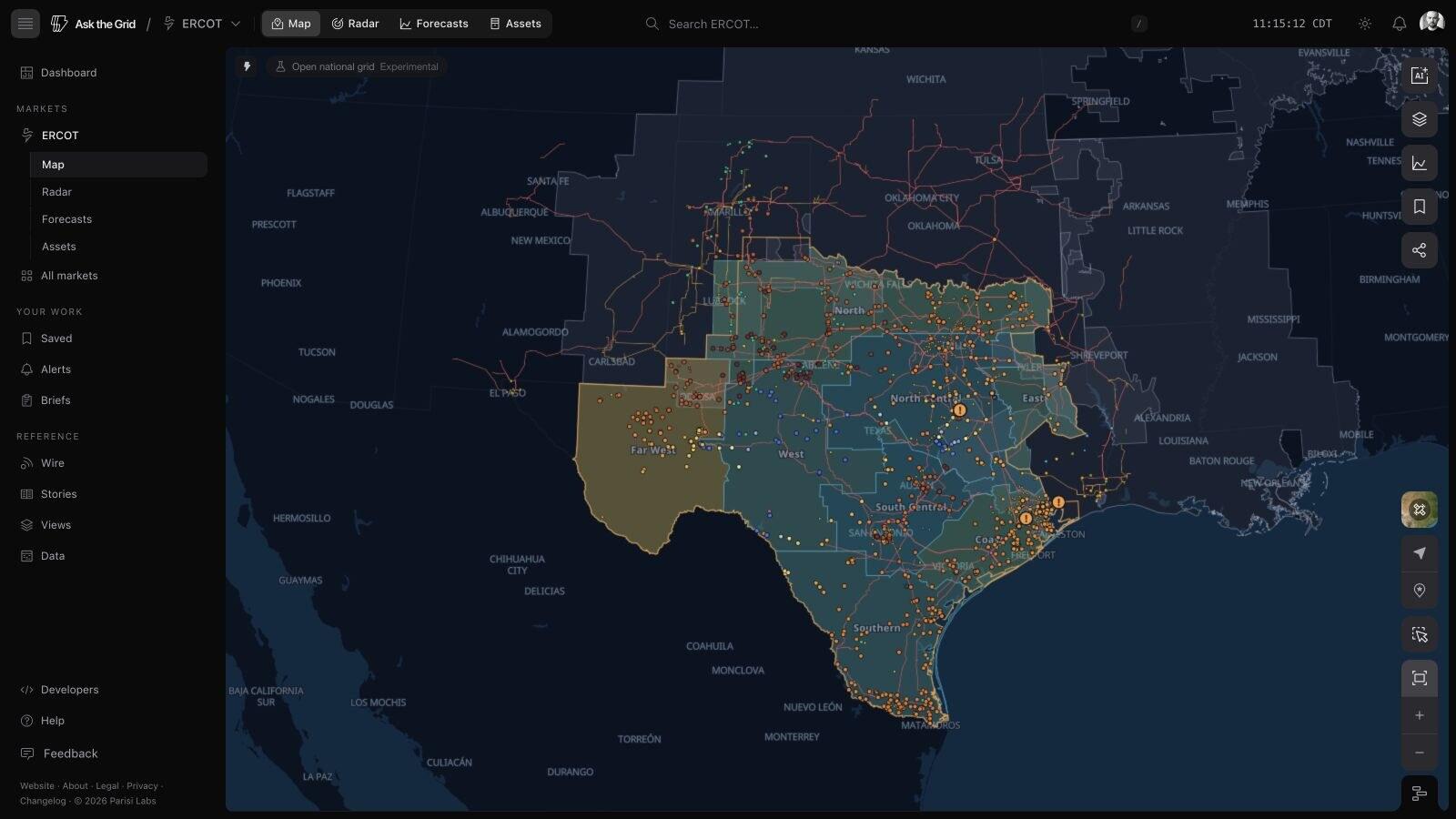
See beyond the queue row.
Place a project in the working grid: its transmission context, nearby resources, recurring congestion, operating events, and the evidence behind each development assumption.
What does this point of interconnection mean in practice, and which network condition can change cost, schedule, or project value?
System state, physical context, and evidence move together — one surface, shown in full, instead of three separate research tasks.
Place the point of interconnection inside the transmission and market geography it will actually join.
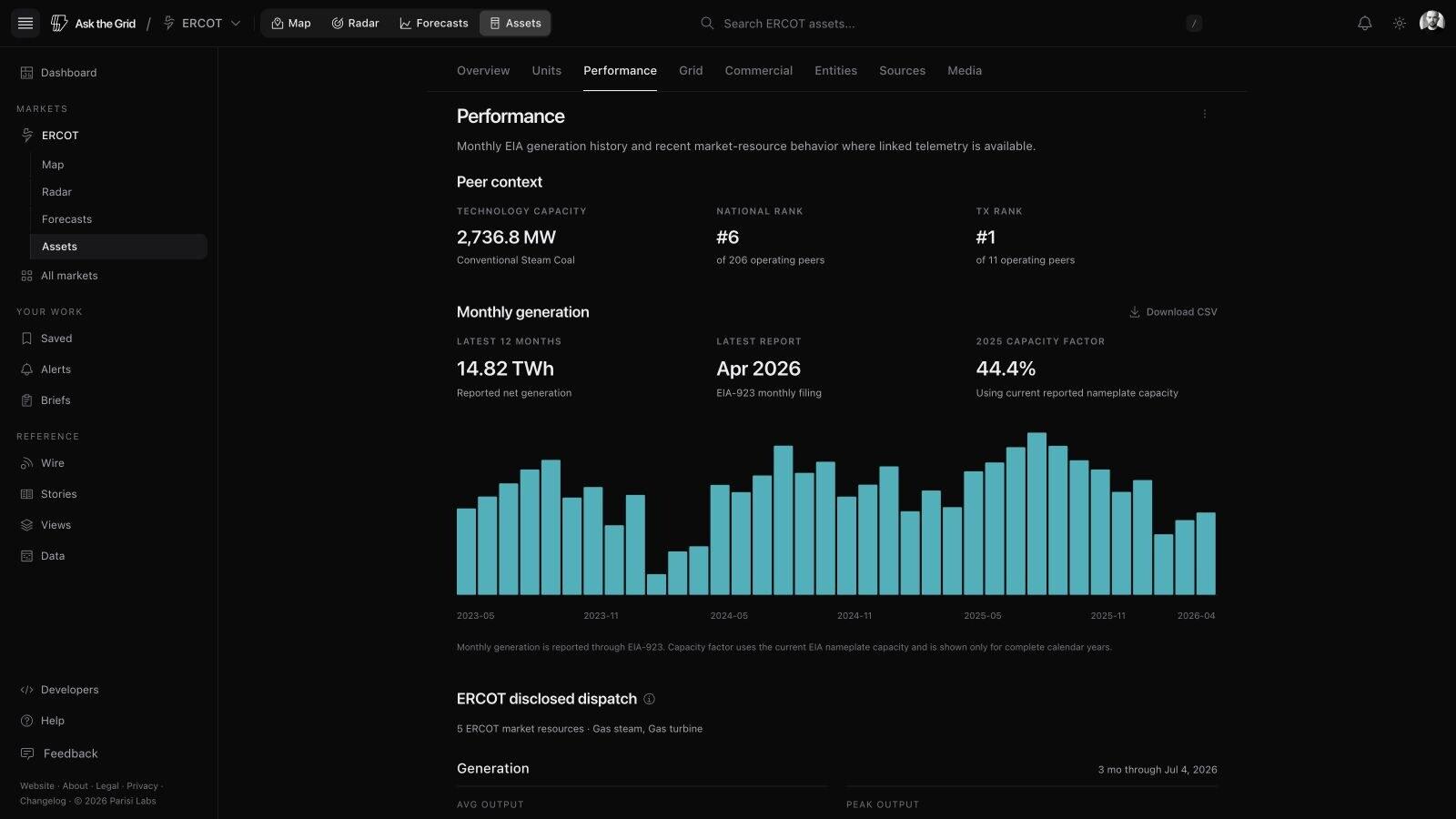
Inspect existing assets and their observed output to understand the operating neighborhood around the project.
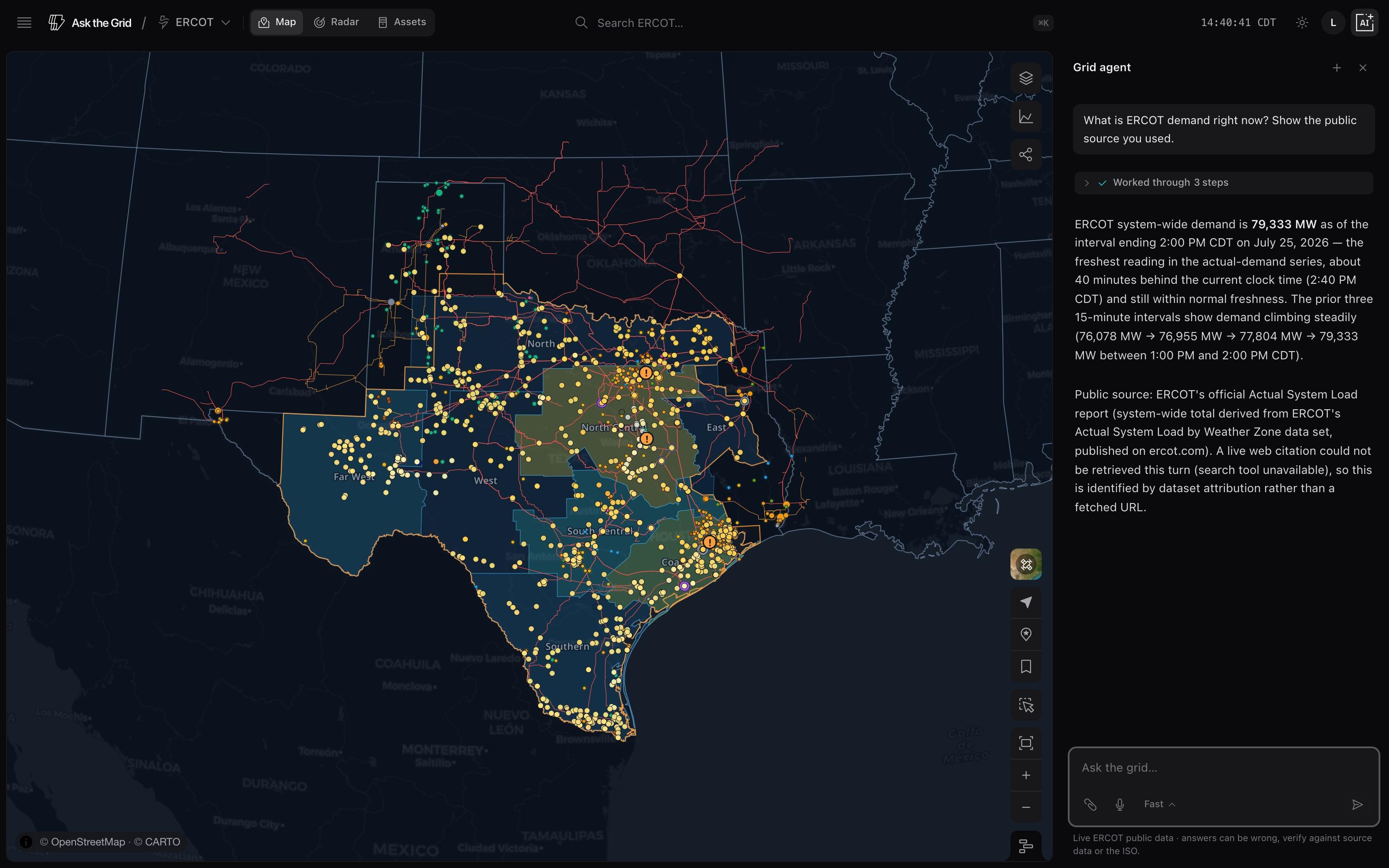
Ask the project question in plain language, then carry the cited sources into the next diligence step.
A queue row is not a thesis. Ask the Grid places a point of interconnection in the working grid — its transmission context, its neighbors, and the evidence behind every assumption.
Place a point of interconnection in the transmission and congestion geography it will actually join.
The existing fleet around the node and how it has actually behaved — the operating neighborhood, not a static list.
The interconnection queue plus the price and constraint history for the point under study.
Ask the project question in plain language and carry the cited sources into the next study or negotiation.
Forecast and anomaly models to pressure-test how the location behaves under conditions not yet in the record.
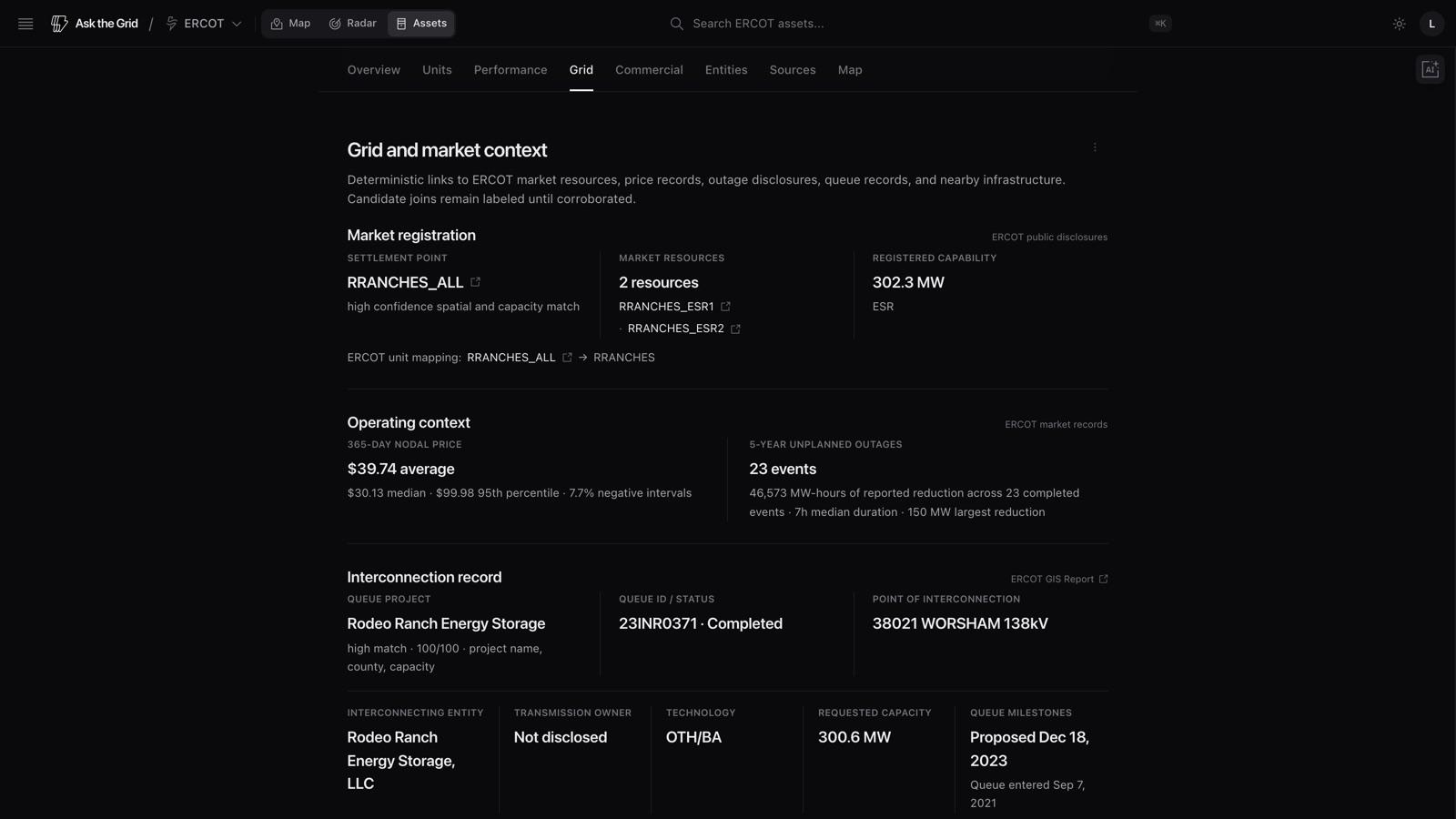
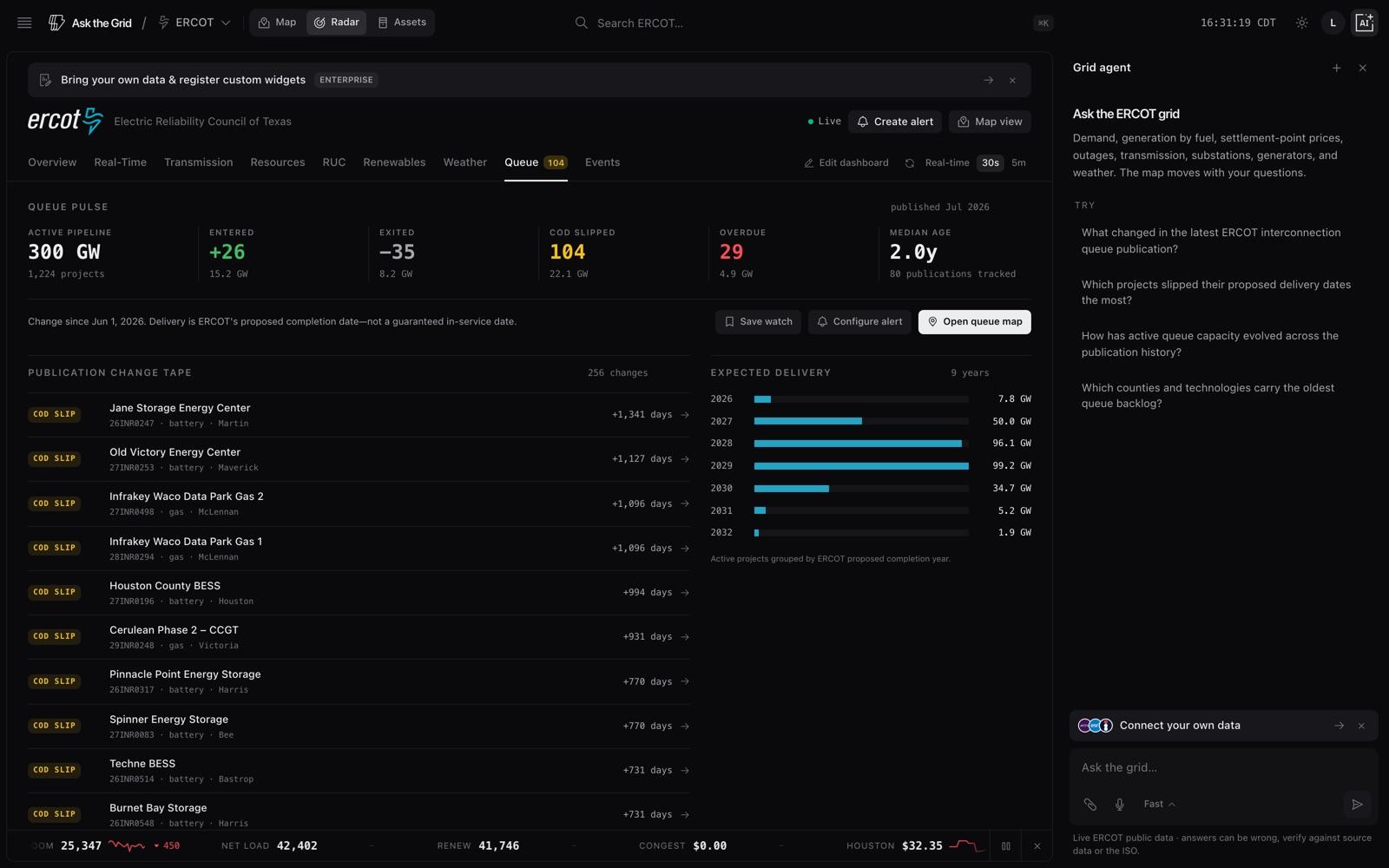
An interconnection view tied to the working network and the evidence behind the project thesis.
Network context
Nearby asset evidence
Diligence continuity